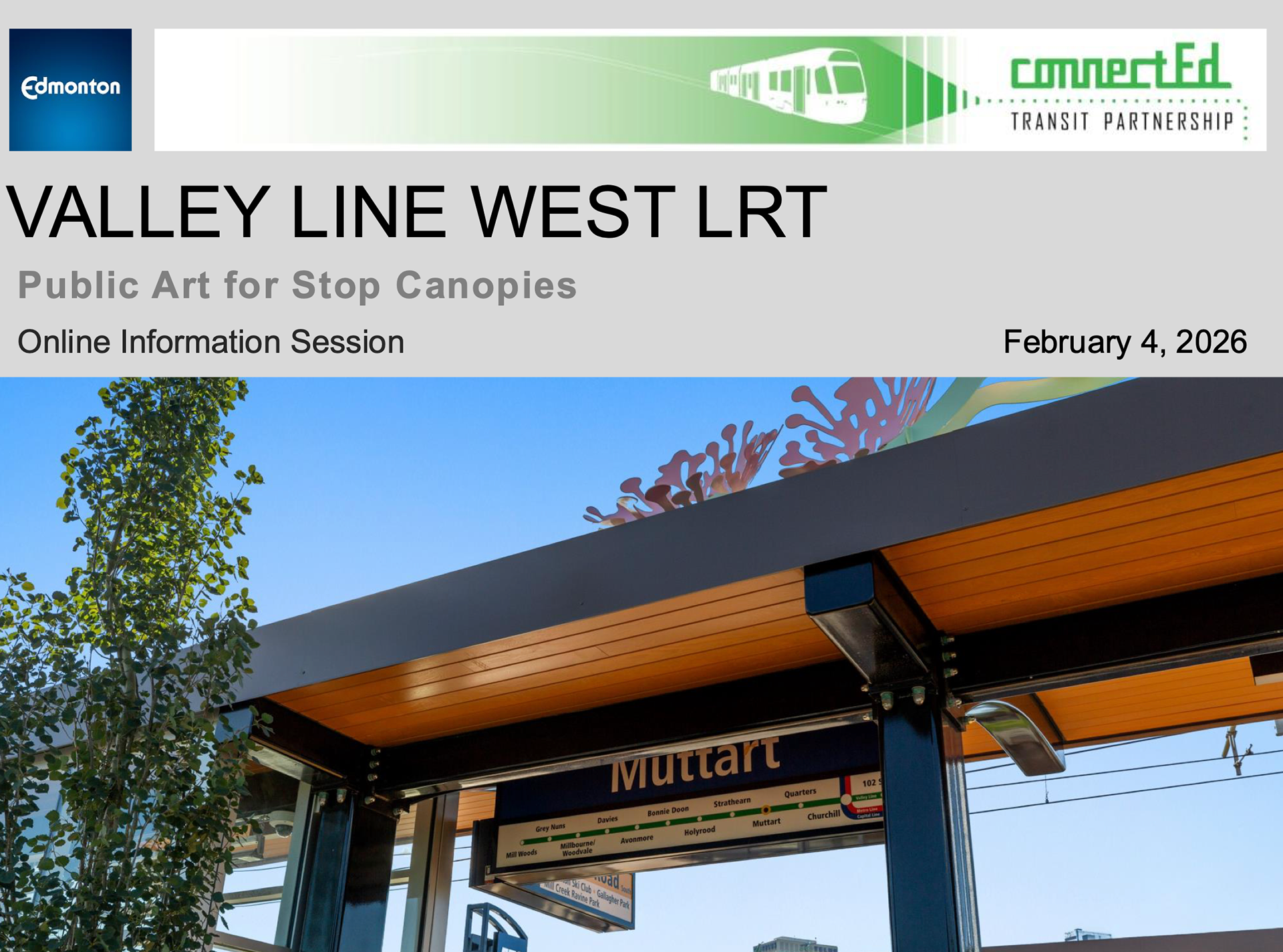
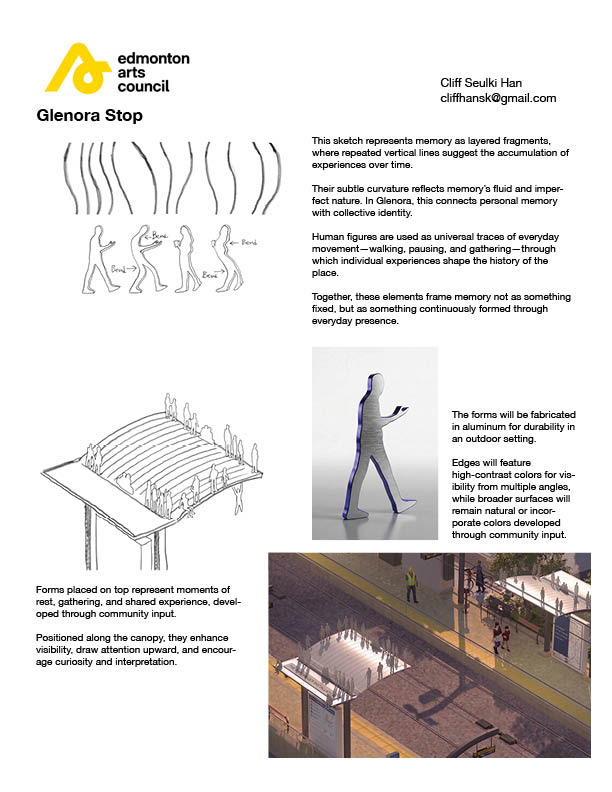
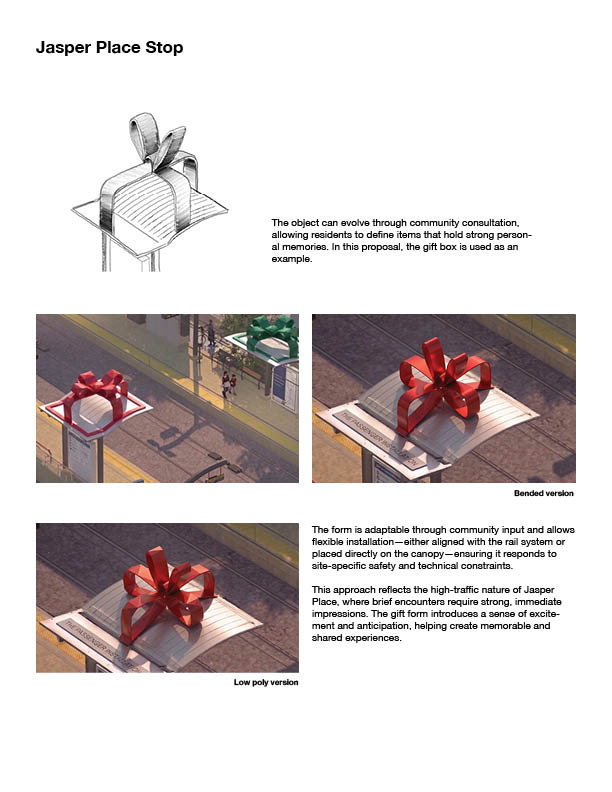
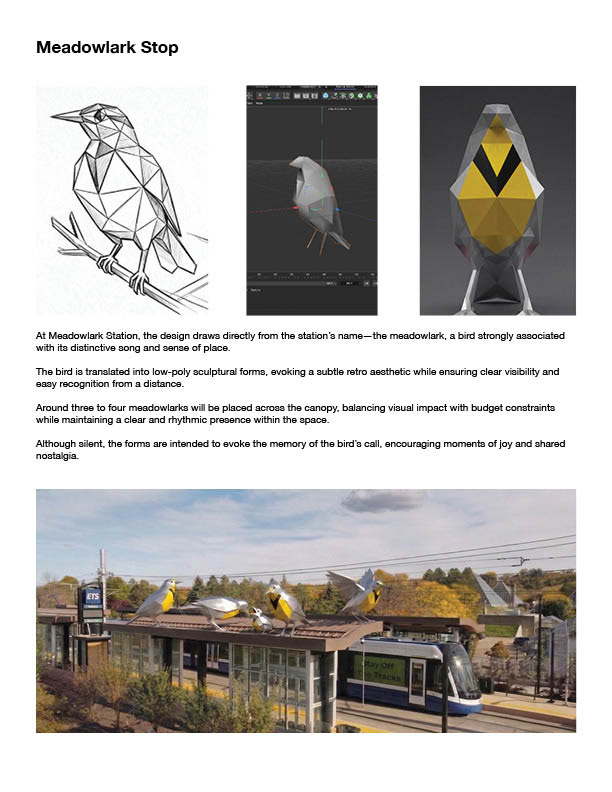
Edmonton LRT Canopy Design Concept (Stage2), 2026
Dog Waste Container Prototype (2023)
- NMF(Neighbourhood Matching Fund with City of Vancouver) on going (2026) Partner : Kitsilano Neighbourhood House
PROJECT TYPE
Public Infrastructure Prototype
Park Waste Management Fixture
Park Waste Management Fixture
SCOPE
Concept development, form design, CNC fabrication prototype
CONTEXT
Designed as a site-responsive waste container concept for Canadian municipal parks, addressing the need for functional dog waste stations that integrate positively into community environments.
DESIGN STRATEGY
The form introduces a modular, adaptable silhouette that can be customized to reflect local identity—such as regional character, town branding, or commonly seen dog breeds.
This approach allows municipalities to maintain system consistency while incorporating localized variation.
This approach allows municipalities to maintain system consistency while incorporating localized variation.
MATERIAL & FABRICATION
CNC-cut plywood prototype
20" x 30" format (scaled model)
Designed for scalable adaptation to exterior-grade materials (e.g., powder-coated steel, HDPE, marine-grade plywood)
FUNCTIONAL CONTRIBUTION
Improves visibility of waste stations within park environments
Encourages responsible use through approachable design language
Supports modular production and repeatable fabrication
DESIGN INTENT
Repositions a standard municipal utility object as a recognizable and community-integrated element within public space infrastructure.
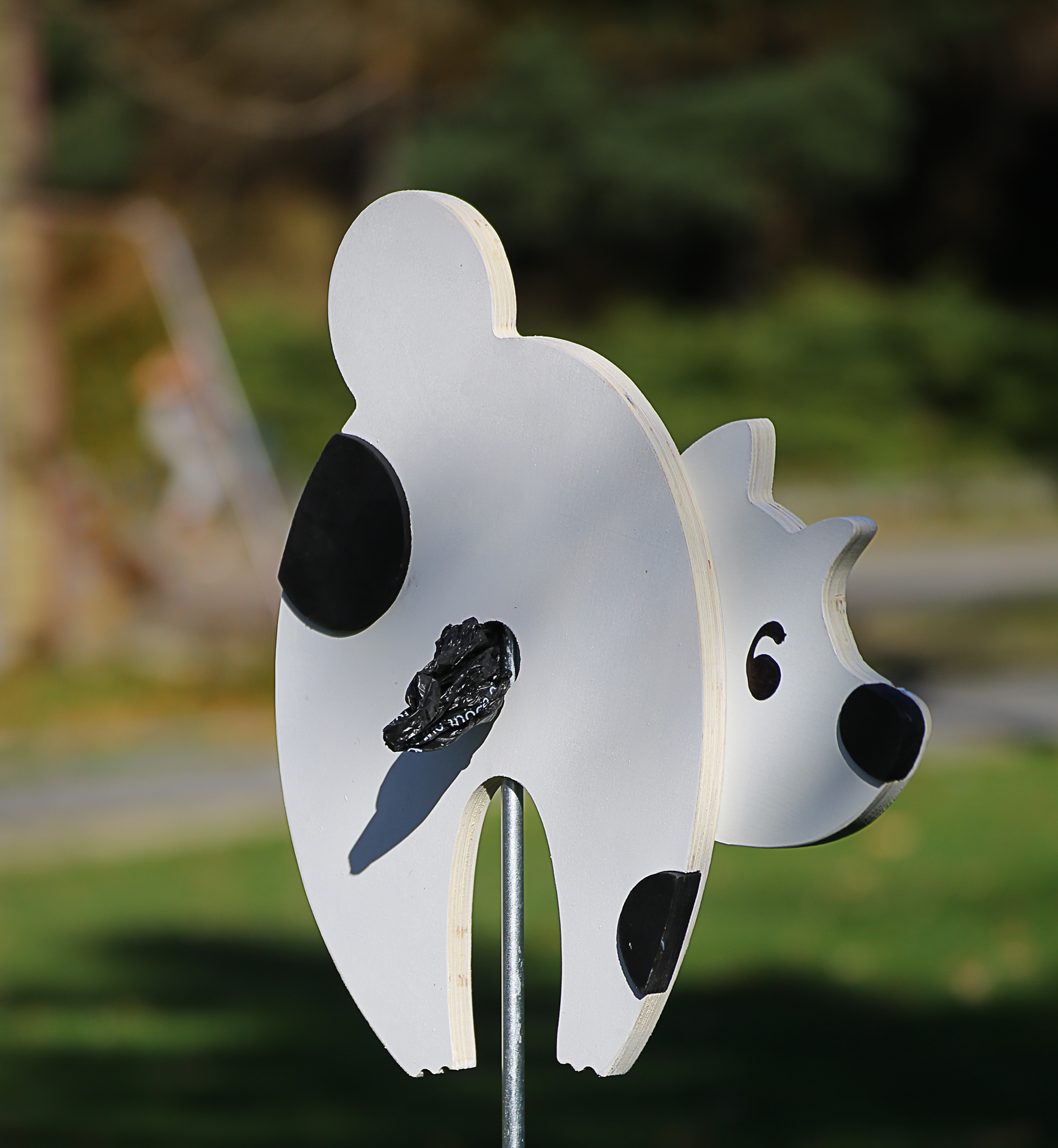
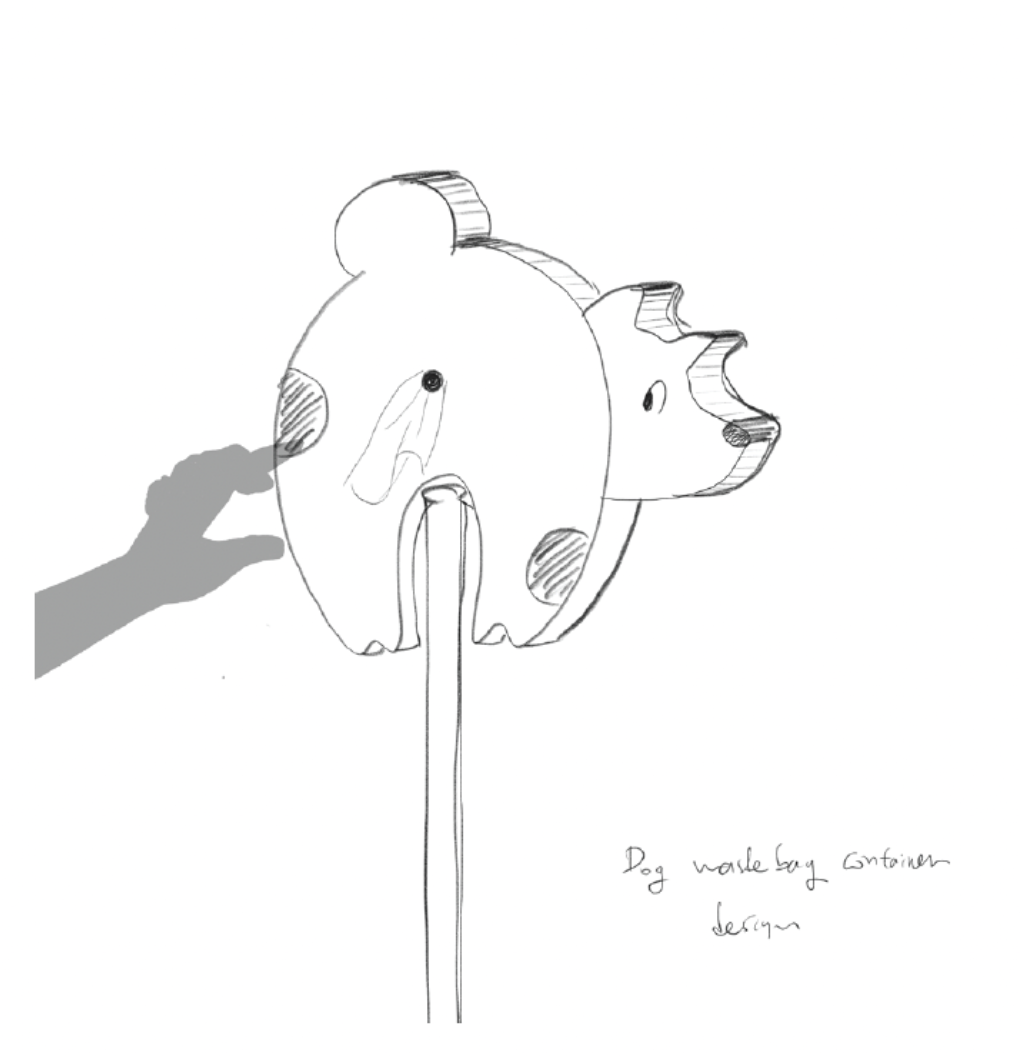
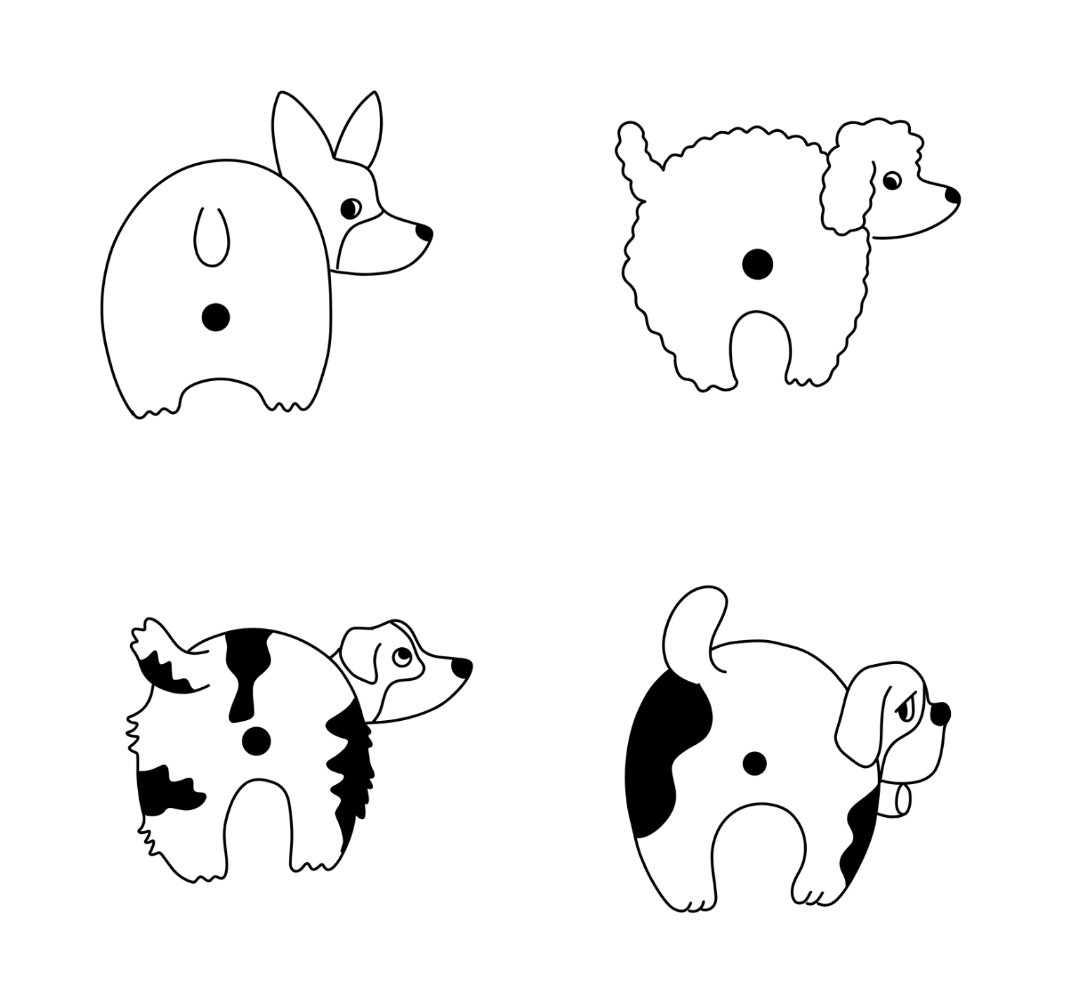
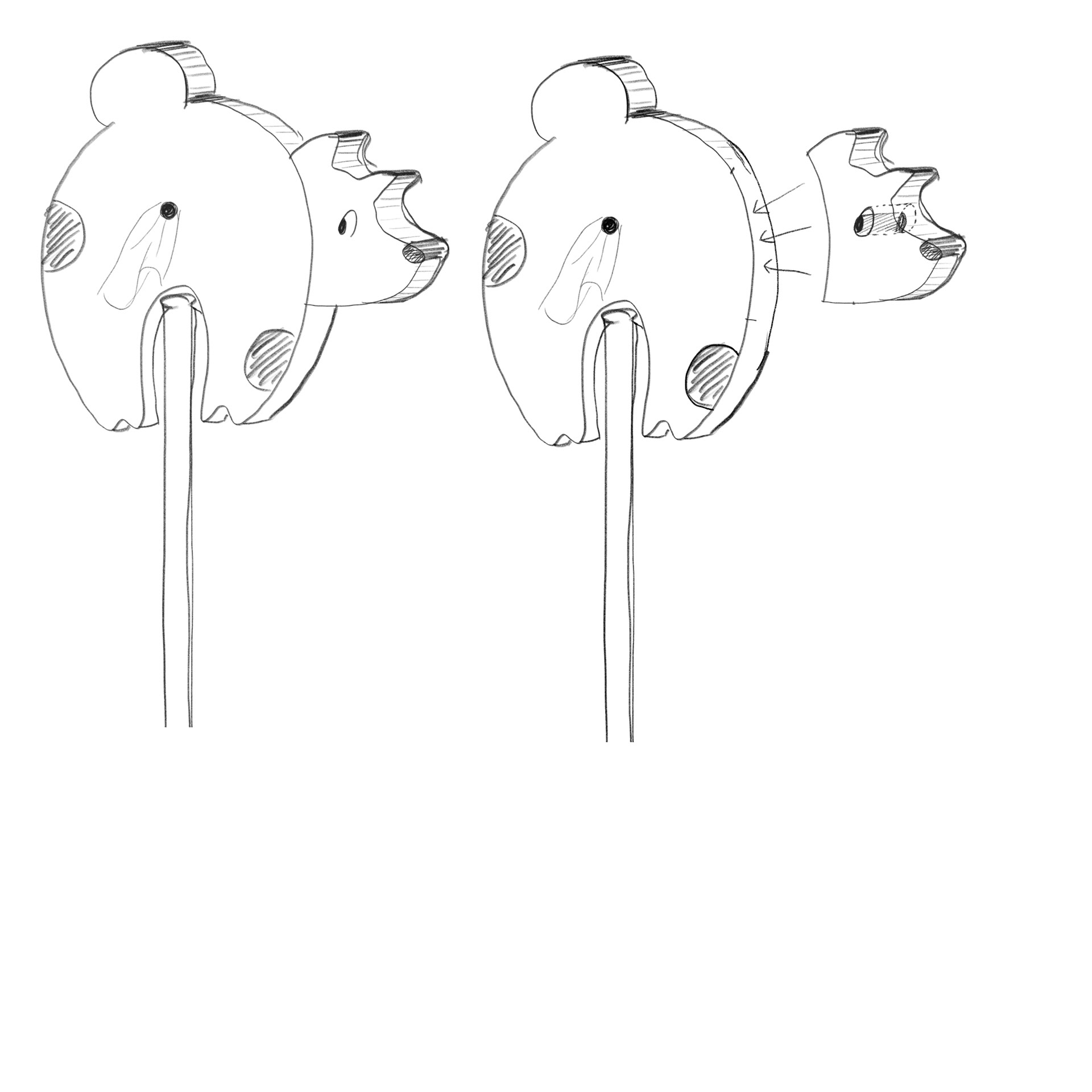
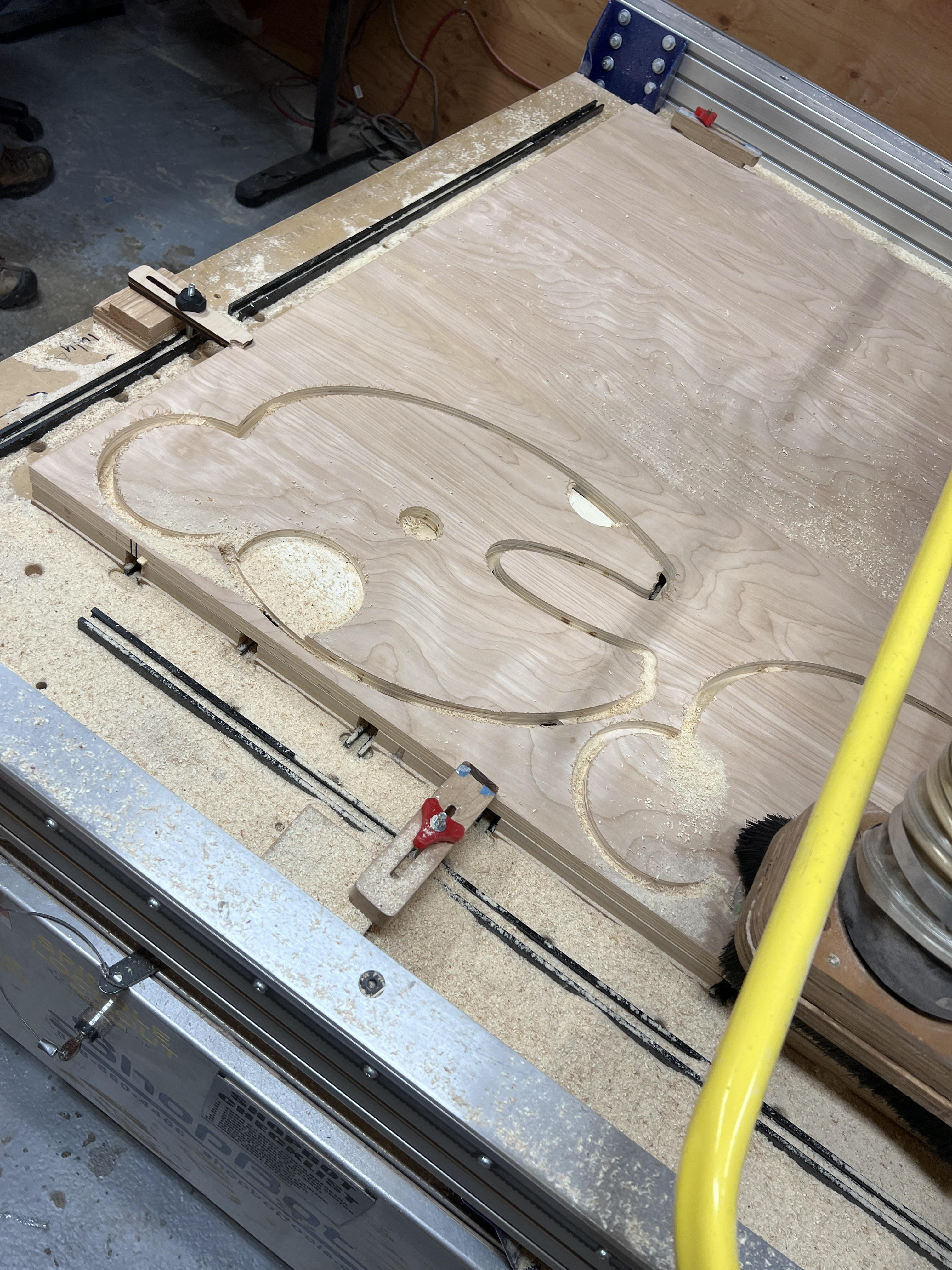
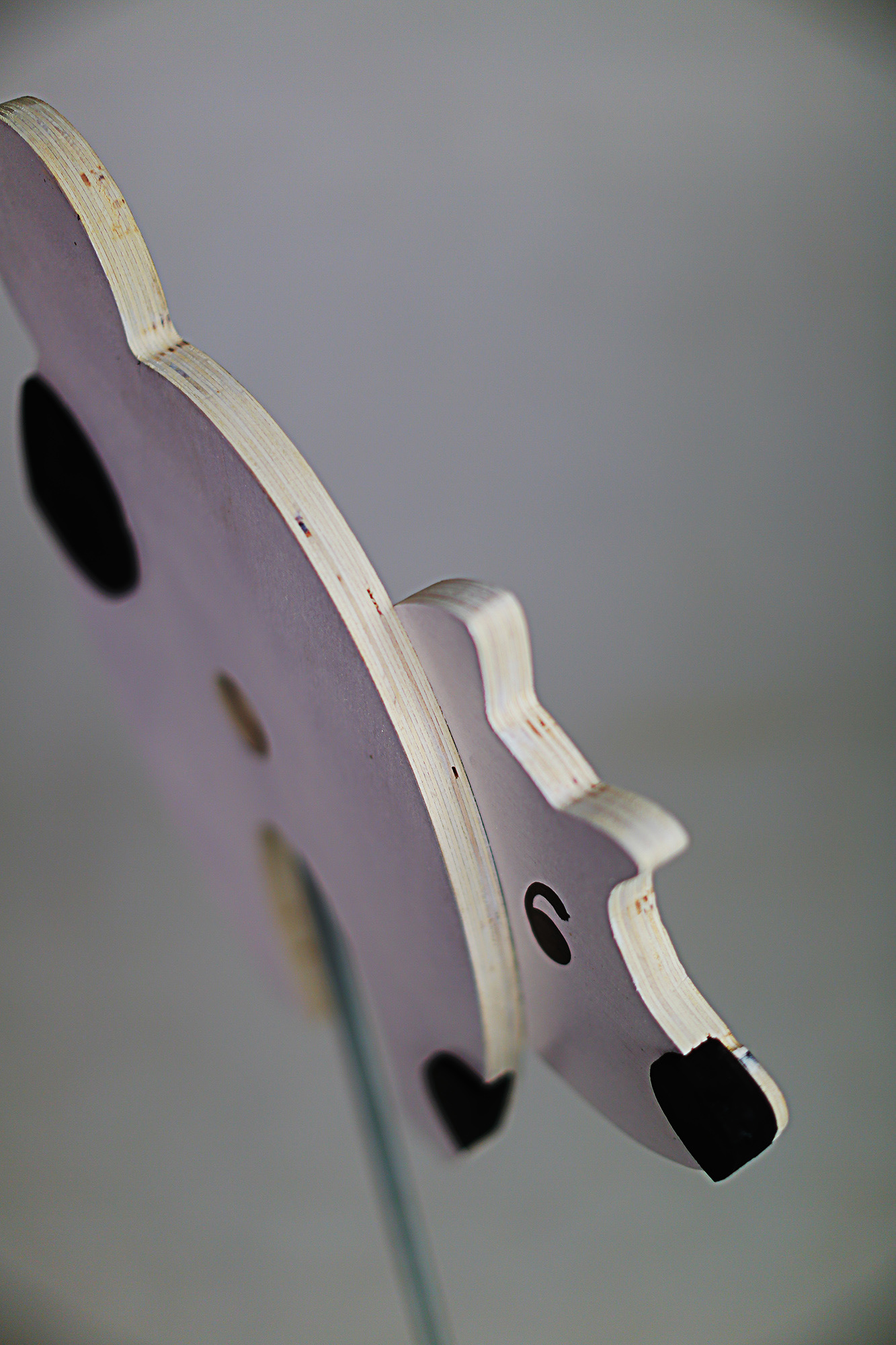
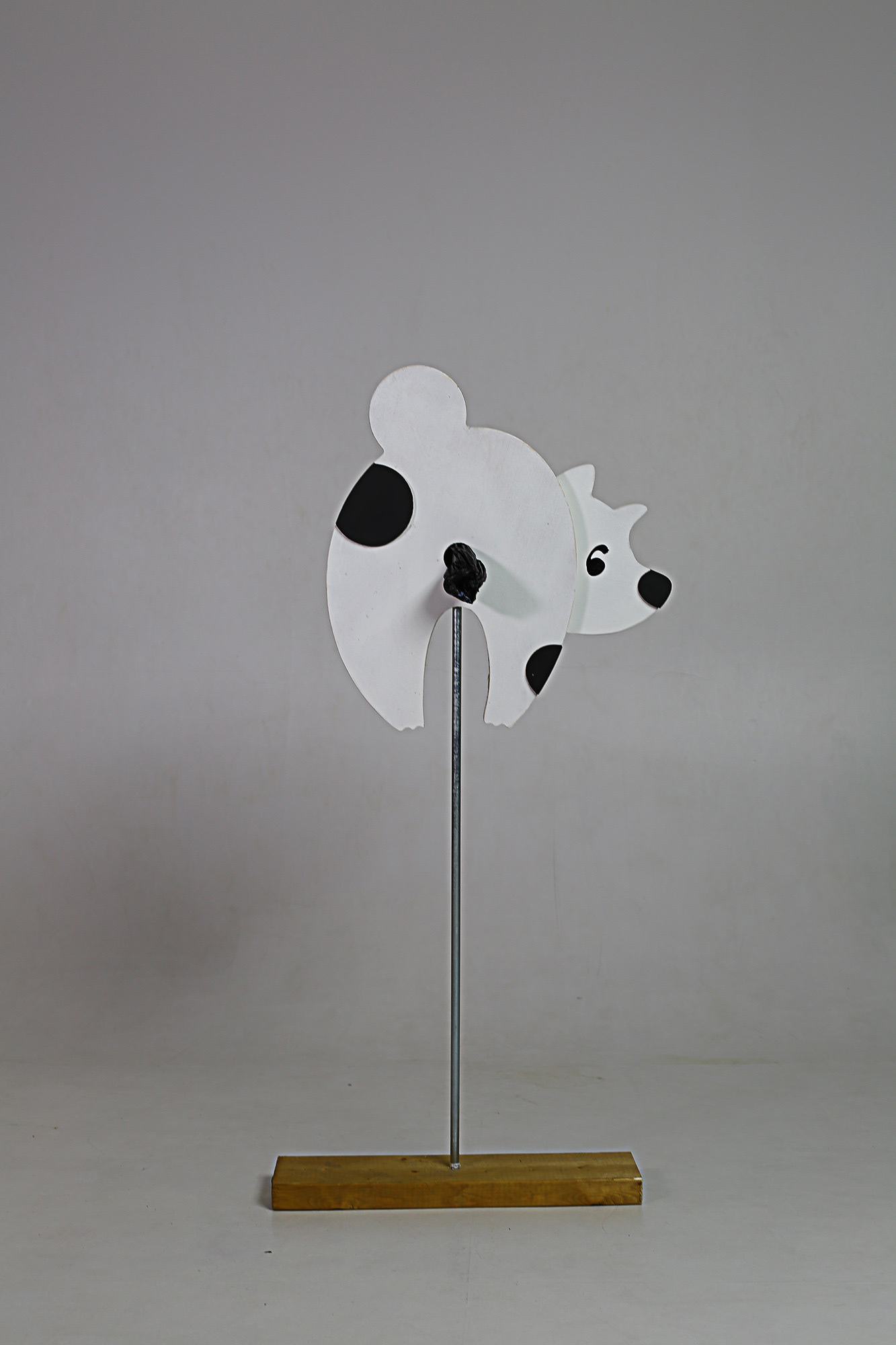
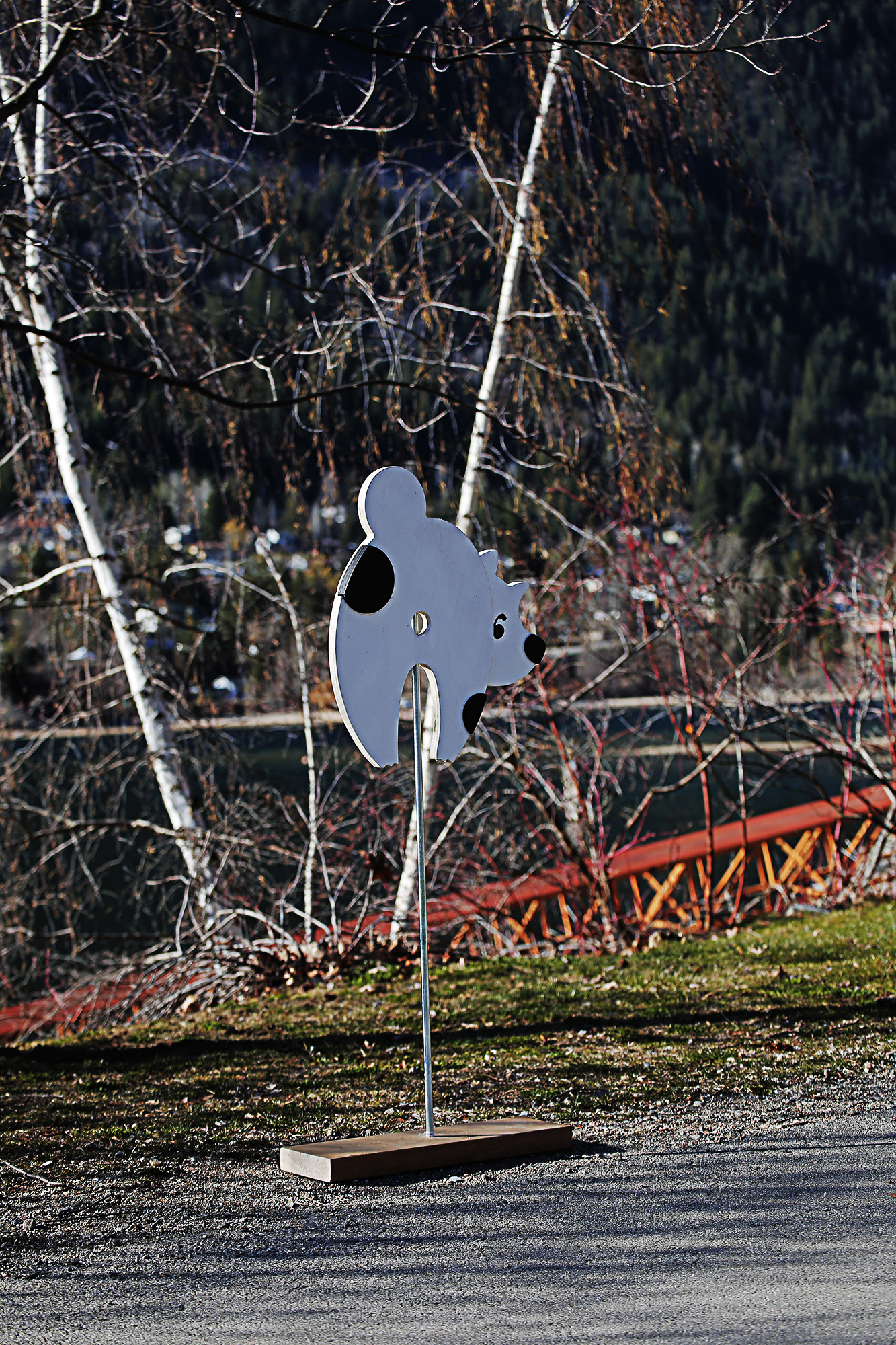
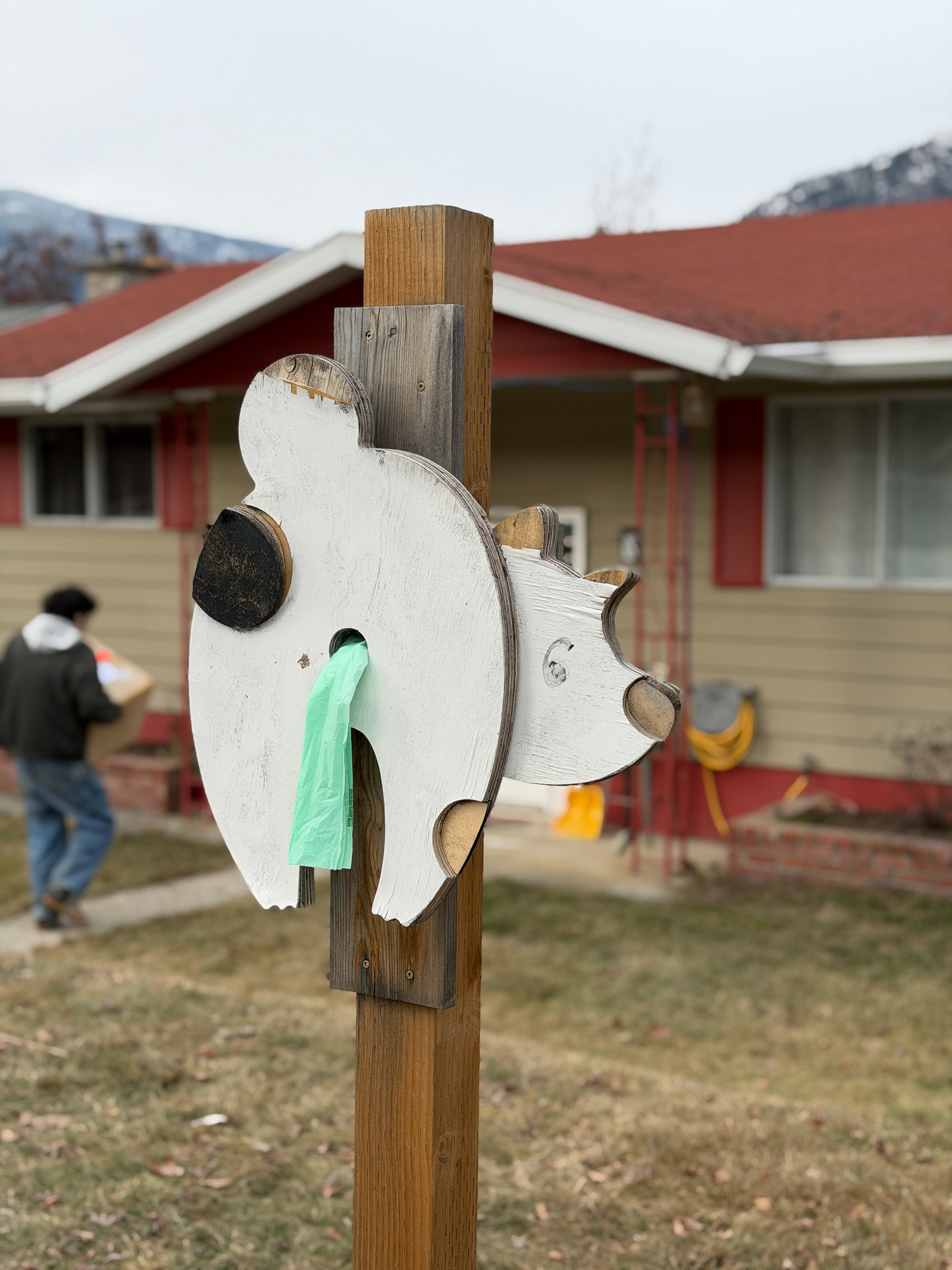
Although this piece was created as a prototype, it is currently functioning in everyday use outside my home. Remarkably, members of our local community in Nelson BC have been voluntarily refilling the plastic bags. It’s deeply moving to see a small, functional design quietly supported and sustained through collective care—something I’m truly grateful for.
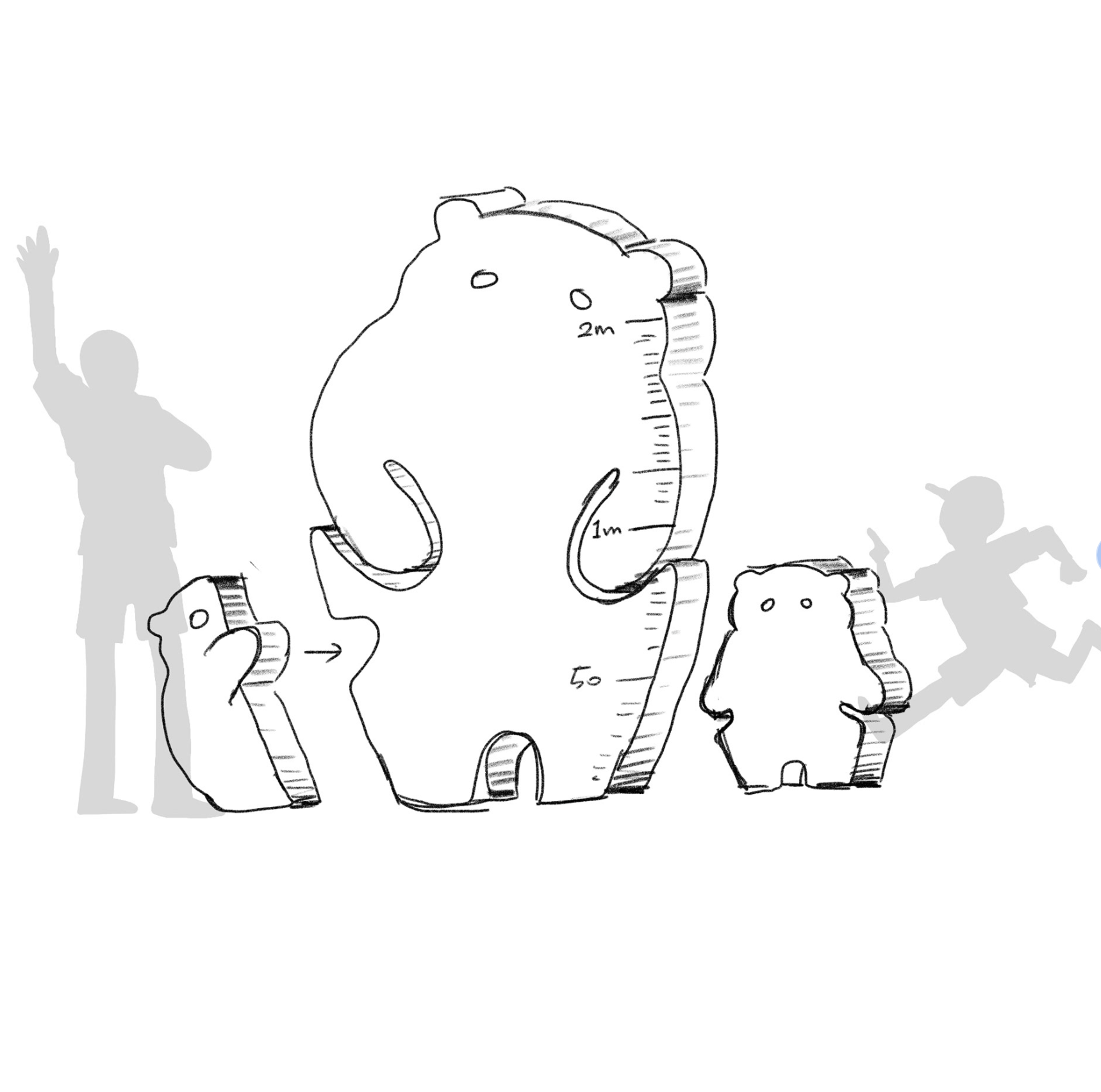
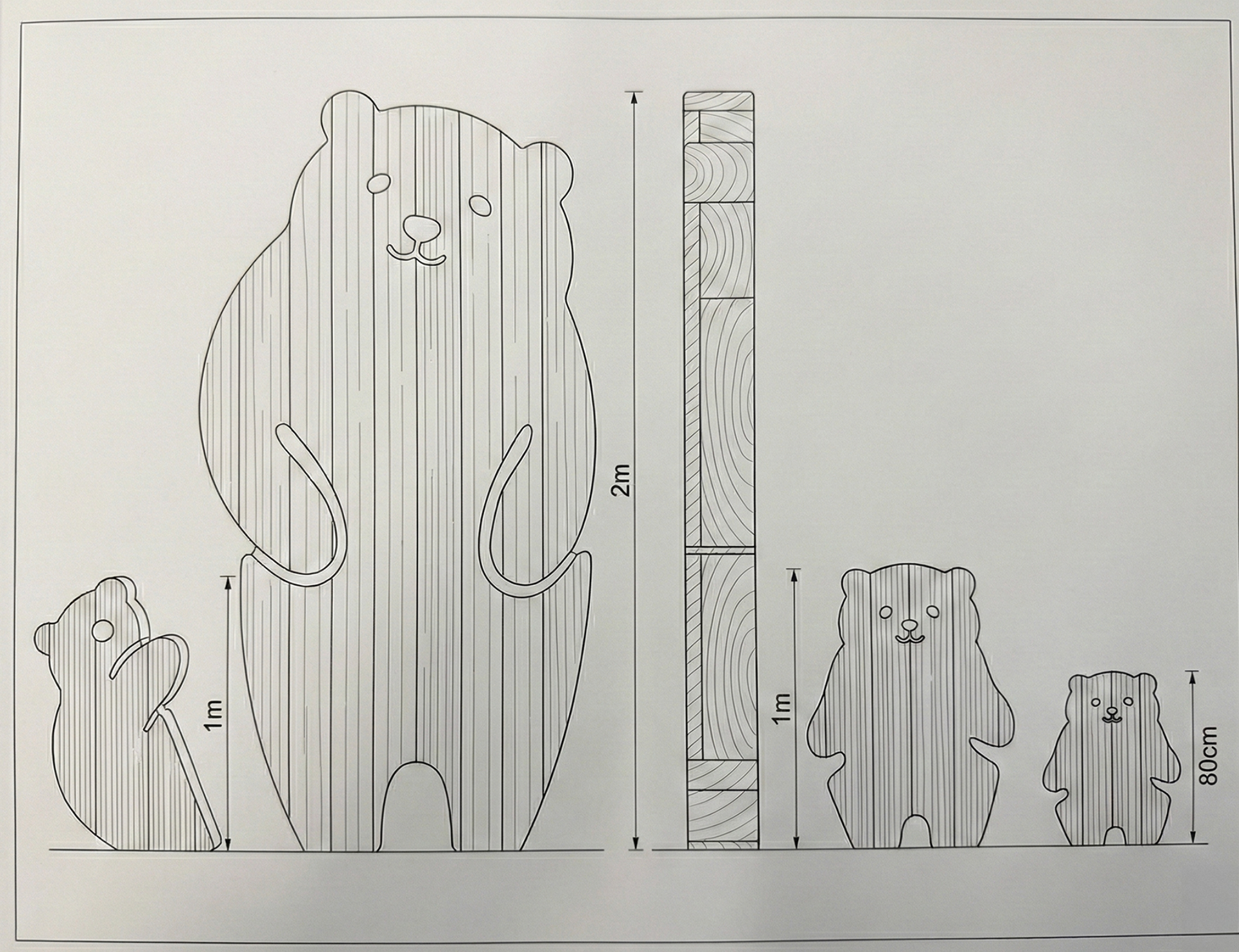
The Big Bear
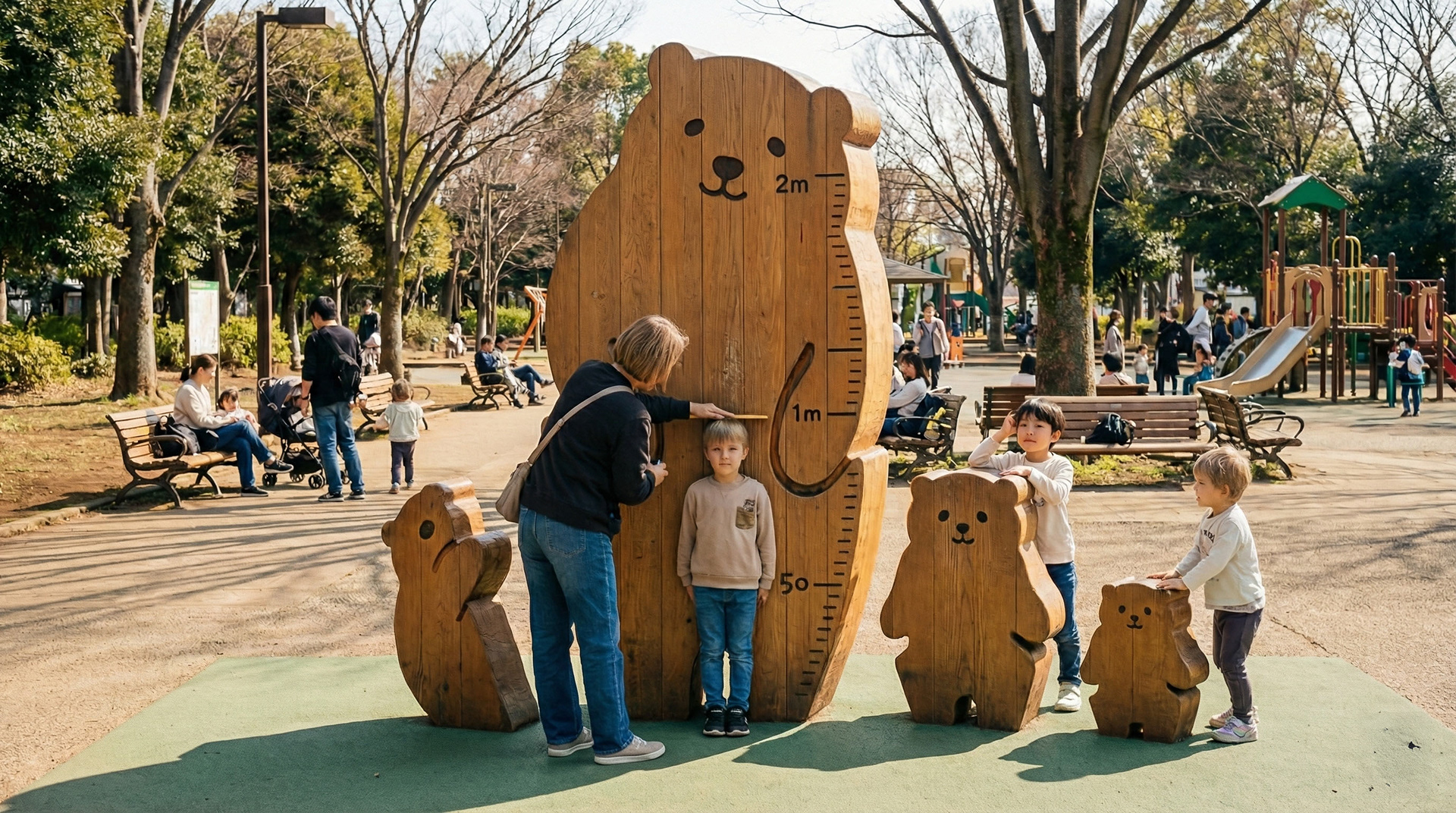
Public Playground Installation (Rendering Study)
PROJECT TYPE
Public Play Infrastructure
Interactive Height-Measurement Installation
Interactive Height-Measurement Installation
SCOPE
Concept development, spatial integration strategy, form design, fabrication planning
PROJECT STATUS
Rendering study for a proposed playground installation
CONTEXT
Designed as a conceptual public playground installation, this project explores how a height-measuring device can be integrated into a sculptural form to enhance engagement within community play environments.
DESIGN STRATEGY
The bear silhouette functions as both a recognizable character and a calibrated measurement surface. By embedding a visible height scale directly into the sculptural body, the installation integrates growth tracking into the spatial experience of play.
Rather than operating as a standalone measuring tool, the structure becomes part of the playground landscape—encouraging children to physically compare their height against a fixed reference point over repeated visits.
MATERIAL & FABRICATION APPROACH
Laminated wood construction (proposed)
CNC-assisted shaping for scalable production
Rounded geometry to support playground safety considerations
Designed for adaptation to outdoor-grade materials
FUNCTIONAL CONTRIBUTION
Provides intuitive height comparison without additional equipment
Encourages recurring engagement over time
Supports parent-child interaction within public space
Integrates educational interaction into recreational infrastructure
SPATIAL INTEGRATION
The warm wood tone and softened geometry are intended to harmonize with natural playground materials, ensuring compatibility with park environments while maintaining visual clarity.
DESIGN INTENT
This rendering study reframes a conventional height marker as a site-responsive public installation—transforming a simple measurement act into a repeated spatial ritual that reflects growth, time, and memory within a shared community setting.

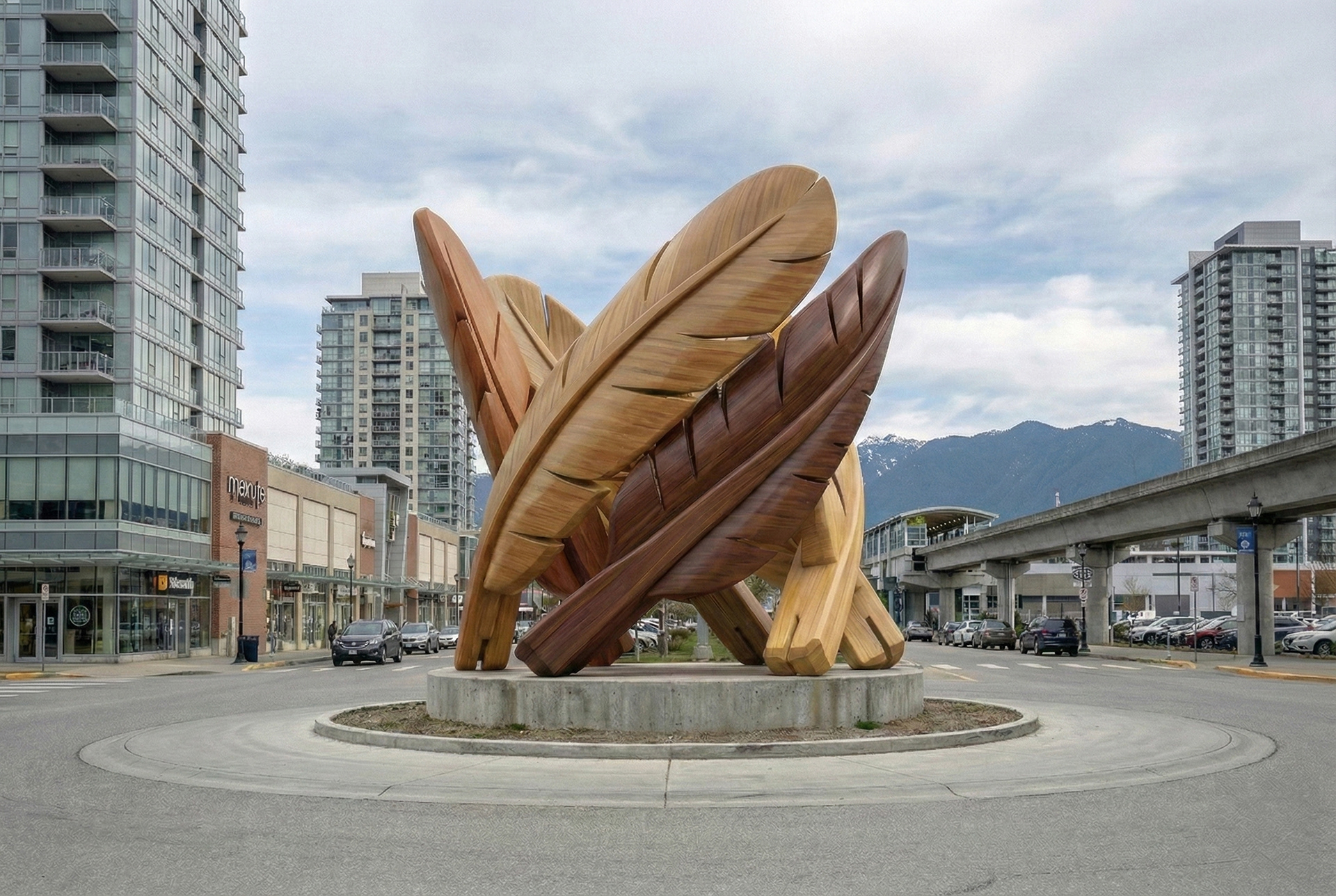
Newton Roundabout Public Art Proposal
Surrey, BC — Public Art Rendering Study
PROJECT TYPE
Public Art Proposal
Civic Roundabout Landmark Installation
Civic Roundabout Landmark Installation
PROJECT STATUS
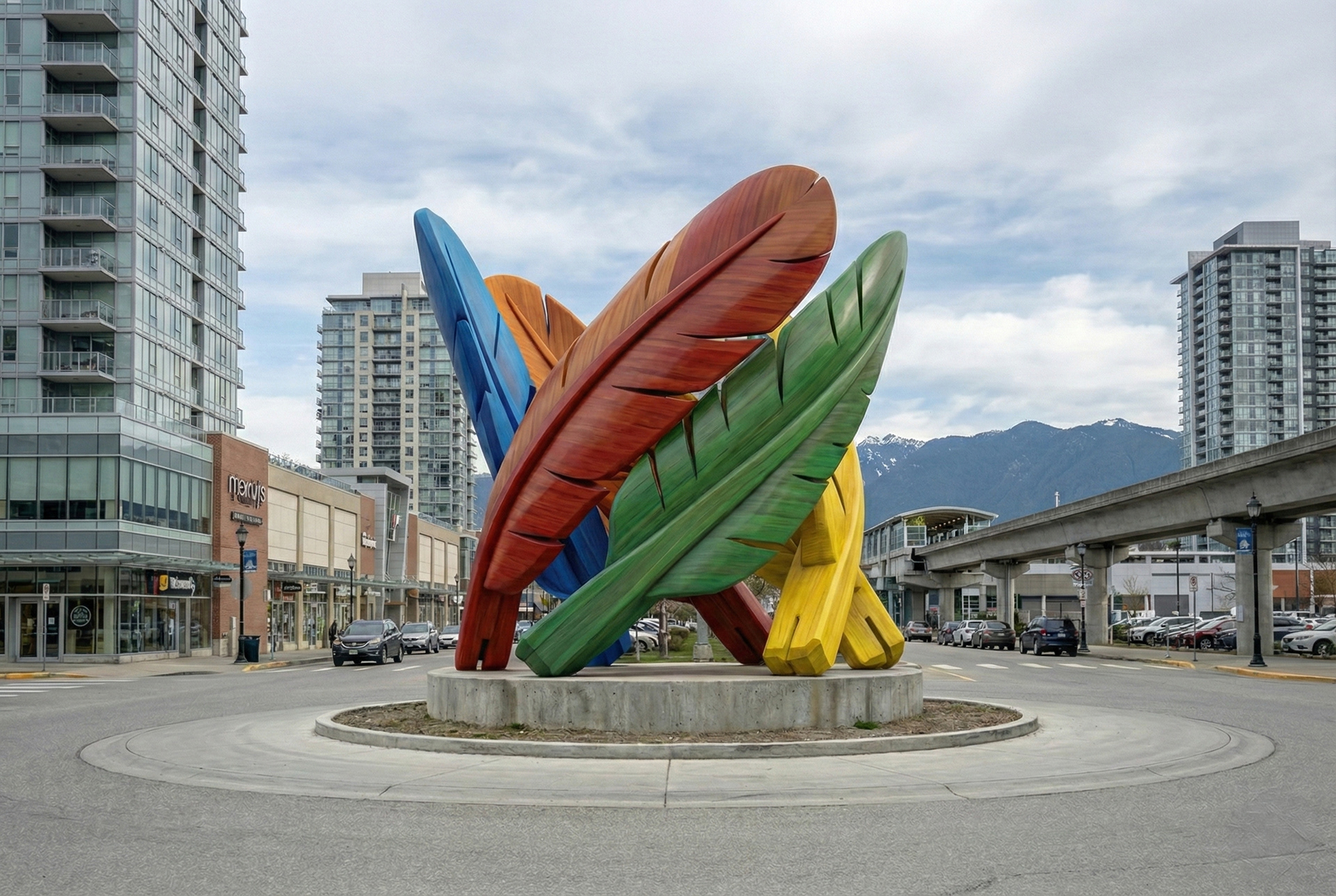
Rendering study submitted for the Newton Roundabout (132 Street & 60 Avenue) public art call, Surrey, BC.
SCOPE
Concept development, site-responsive strategy, formal design, material exploration, spatial visualization
SITE CONTEXT
The proposed installation is designed for a central roundabout located within a predominantly residential area in Surrey, surrounded by parks, schools, and long-established family neighbourhoods.
As the site does not provide pedestrian access, the sculpture is primarily experienced by drivers, cyclists, and pedestrians viewing from adjacent sidewalks and moving vehicles.
DESIGN STRATEGY
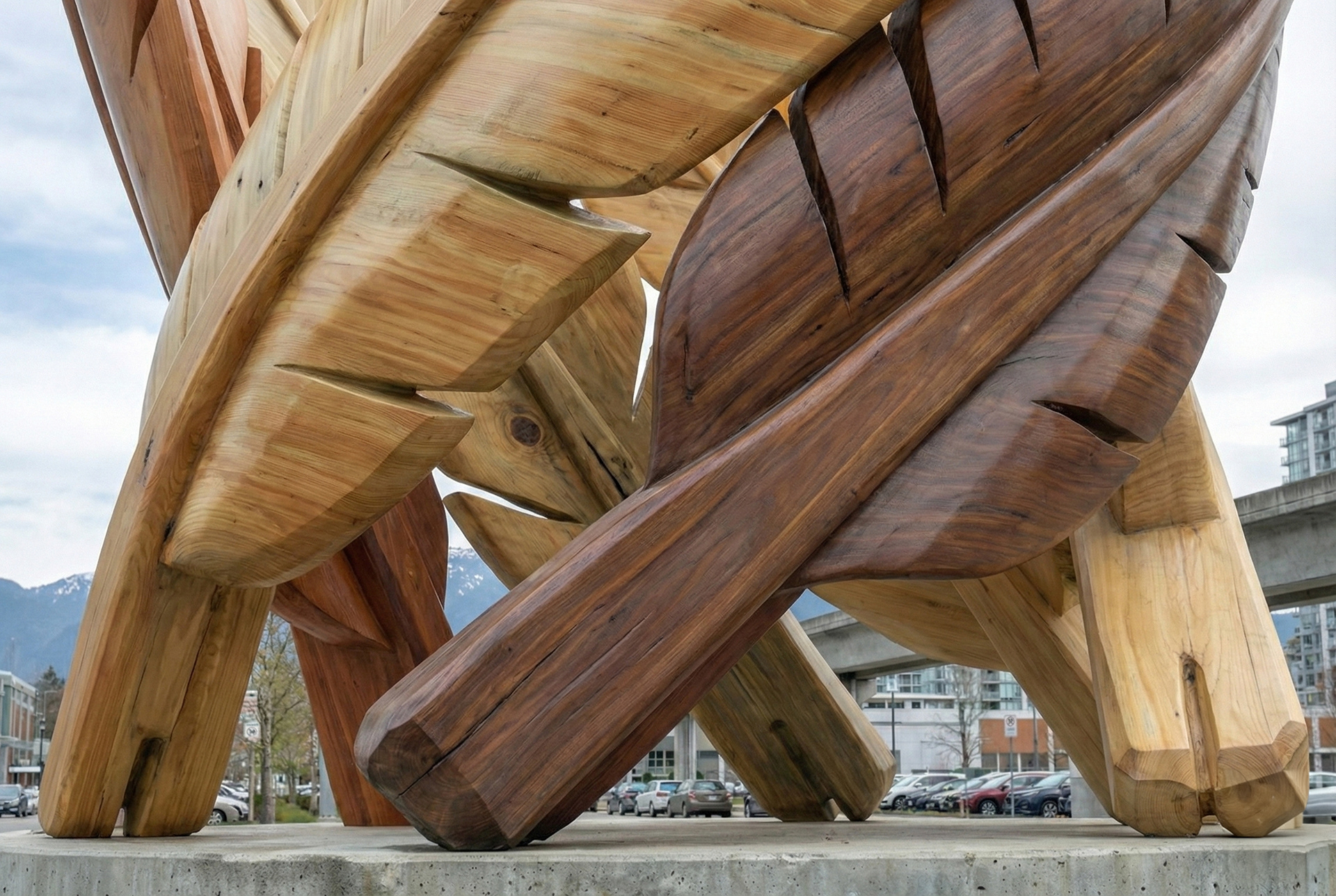
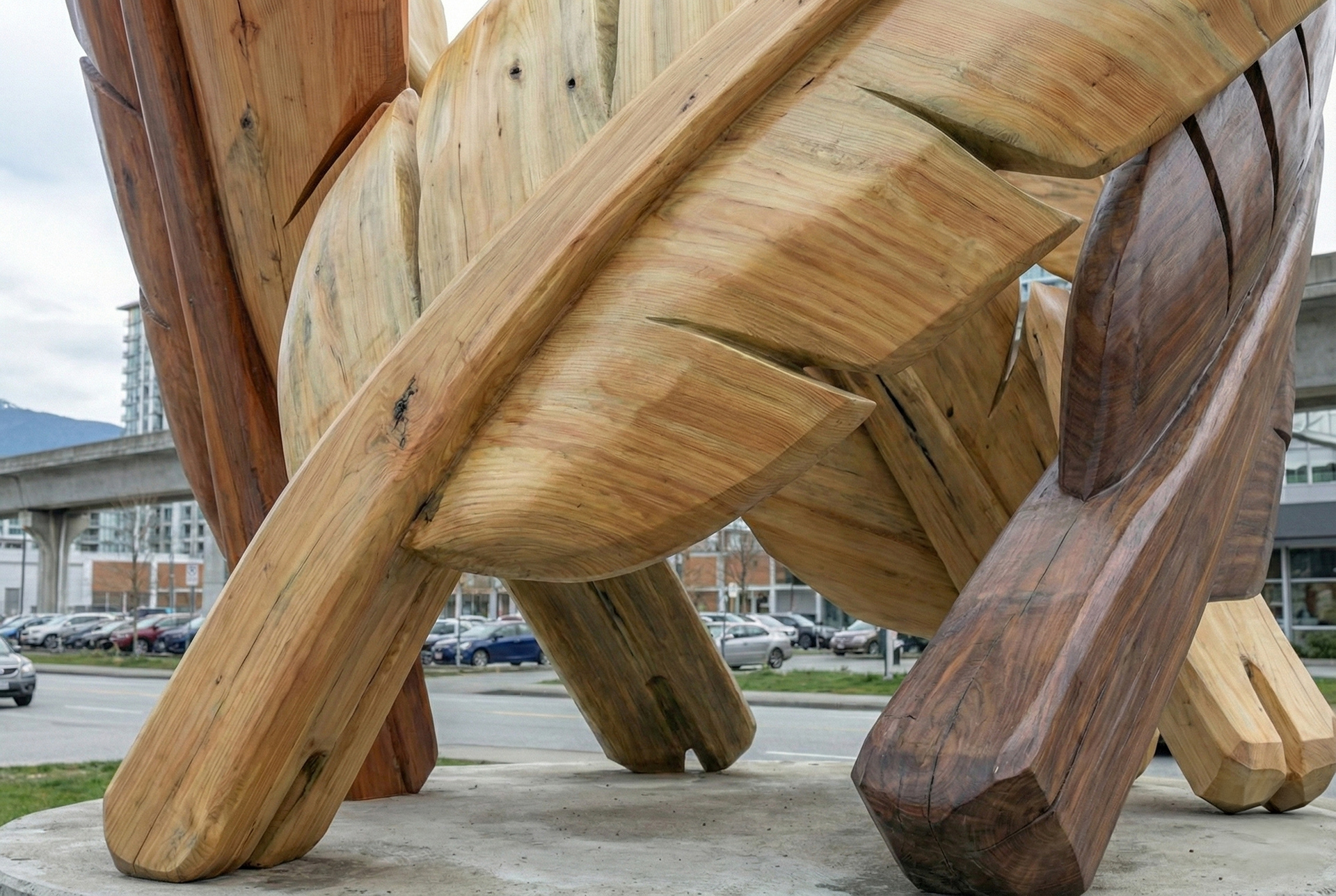
The sculptural form consists of large, interlocking, feather-like elements arranged in a circular, self-supporting configuration.
The overlapping geometry creates visual movement and balance while reinforcing the circular logic of the roundabout itself. The composition is designed to function as a recognizable landmark—transforming a transitional traffic space into a defined civic place.
Rather than using literal imagery, the form draws from organic geometries inspired by leaves, wings, or seeds in motion. This abstraction responds to the call’s emphasis on nature-related artworks that foster calmness and joy within the community.
MATERIAL & FABRICATION APPROACH
Proposed wood-based material palette (exterior-grade adaptation anticipated)
Modular construction strategy for scalable fabrication
Engineered internal support structure (conceptual phase)
Designed for durability within exposed traffic-island conditions
Material exploration in the rendering considers varied wood tones and directional grain patterns to enhance depth and legibility from multiple viewing angles.
VISUAL PERFORMANCE
Given the site’s vehicular context, the composition prioritizes:
Strong silhouette recognition
360-degree legibility
Vertical presence within landscaped surroundings
Clear massing above seasonal planting growth
Shifting light conditions throughout the day generate dynamic shadow patterns across the layered surfaces, reinforcing visibility and perceptual change during repeated pass-by experiences.
SITE RESPONSIVENESS
The circular configuration directly reflects the geometry of the roundabout, ensuring formal alignment with the spatial conditions of the site.
The proposal acknowledges:
No pedestrian access constraints
Long-term durability considerations
Maintenance visibility requirements
Safety setbacks and clearance needs
The design positions the sculpture as a calm yet distinctive landmark within traffic flow, contributing identity and orientation without overwhelming the surrounding residential scale.
DESIGN INTENT
This rendering study explores how abstract, nature-derived form can operate as civic infrastructure—serving not only as public art but as a spatial anchor that defines place, reinforces site geometry, and supports long-term community recognition.
Jenga (2025)
Conceptual Installation Study
PROJECT TYPE
Conceptual Installation
Identity & Social Metaphor Study
Identity & Social Metaphor Study
SCOPE
Collaborative concept development, narrative framework, spatial installation exploration
CONTEXT
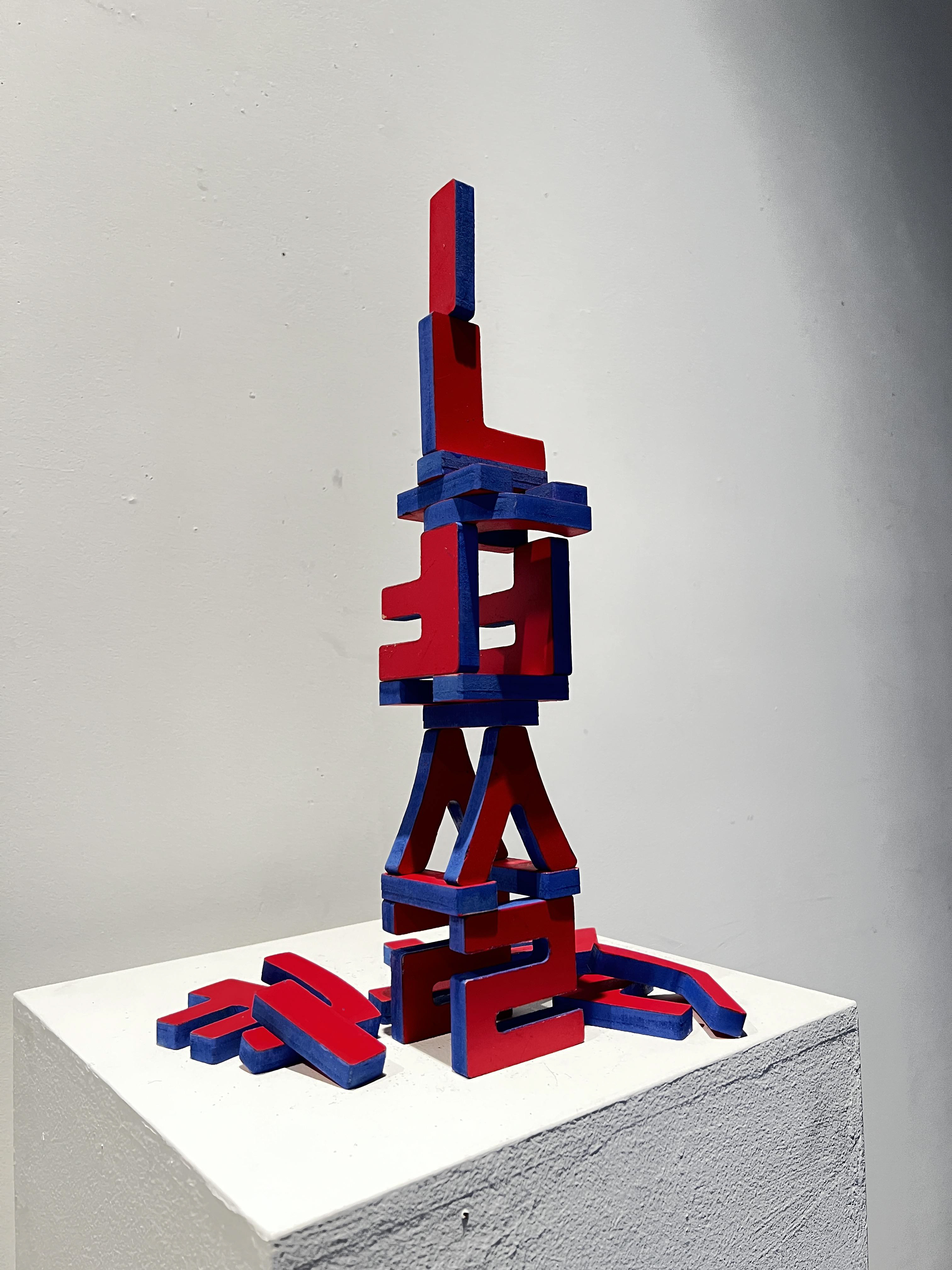
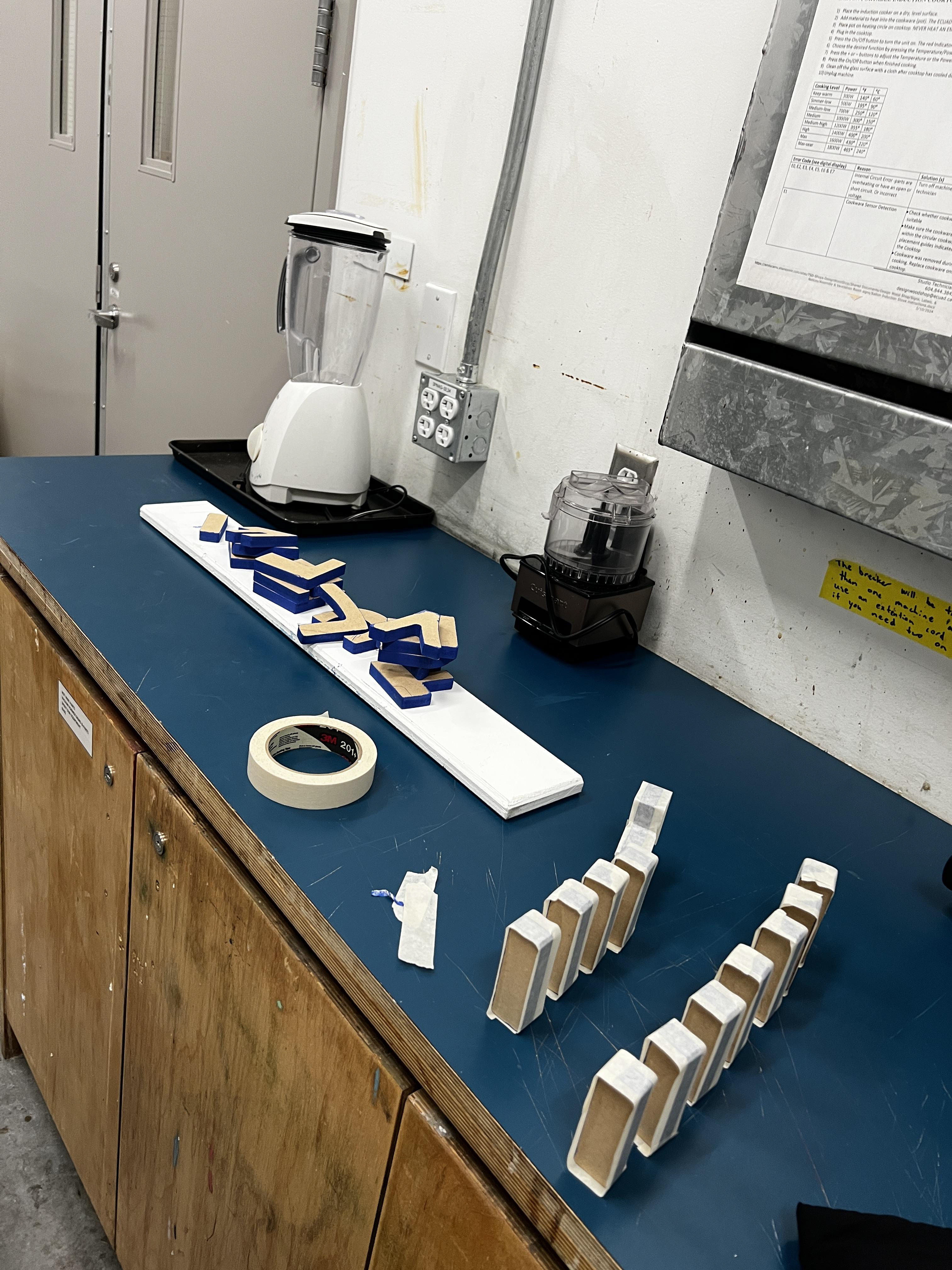
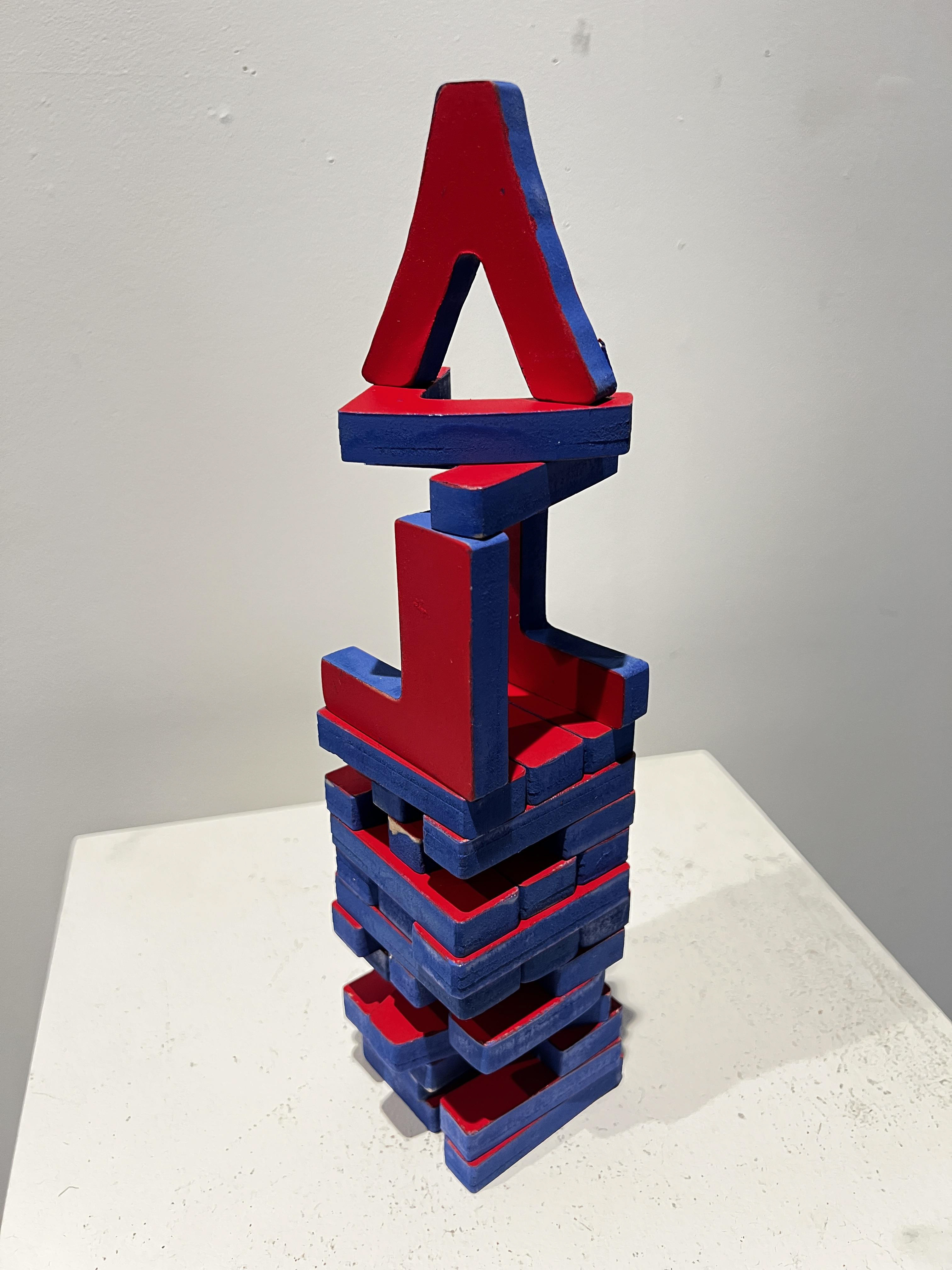
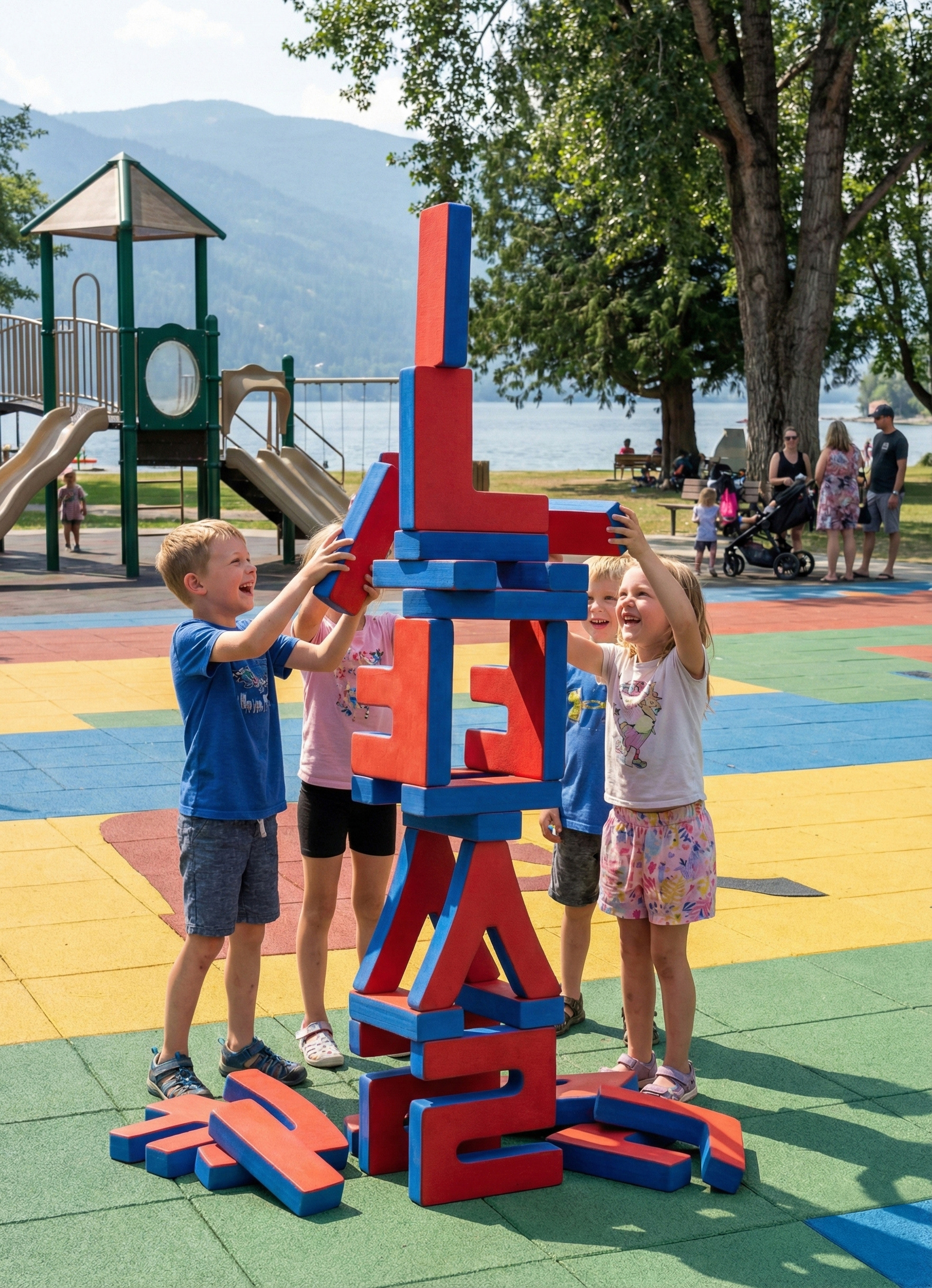
Developed as a collaborative project, Jenga (2025) explores immigrant identity through the spatial metaphor of balance, instability, and reconstruction.
CONCEPT
The work reinterprets the familiar structure of a Jenga tower as a symbolic framework for layered identity. Each block represents a fragment of personal history—culture, language, memory, adaptation, and belonging.
The vertical stacking reflects the ongoing process of constructing selfhood within a new social and geographic context.
SPATIAL & SYMBOLIC STRATEGY
The tower’s inherent instability mirrors the lived experience of migration. At times, the structure appears stable and coherent; at others, it collapses under shifting pressures.
Rather than presenting collapse as failure, the project frames rebuilding as an iterative act—each reconstruction becoming more intentional and self-aware.
MATERIAL LANGUAGE
The modular block system reinforces themes of accumulation and displacement. The repetitive geometry allows the structure to be repeatedly assembled, destabilized, and rebuilt, emphasizing process over permanence.
FUNCTIONAL & CULTURAL CONTRIBUTION
Creates an accessible metaphor for complex identity narratives
Encourages reflection on adaptation and resilience
Positions instability as part of growth rather than weakness
DESIGN INTENT
Jenga (2025) examines how identity is constructed, deconstructed, and reconstructed over time. By transforming a universally recognizable object into a spatial metaphor, the work invites viewers to consider resilience, interdependence, and the evolving architecture of belonging.
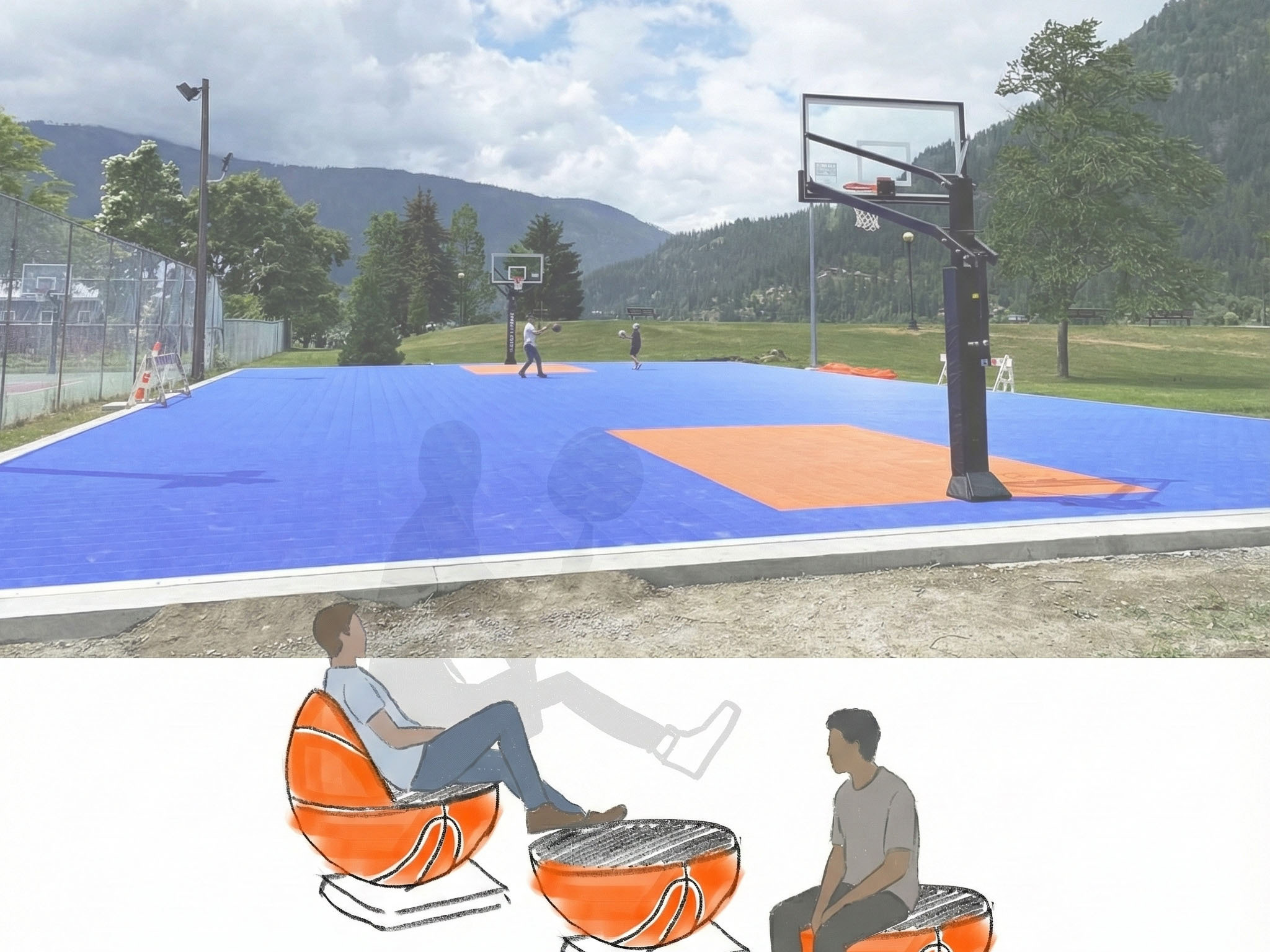
Basketball Shelf Prototype (2023)
Public Signage & Utility Installation
PROJECT TYPE
Functional Public Signage
Park Infrastructure Prototype
Park Infrastructure Prototype
LOCATION
Lakeside Park, Nelson, BC
SCOPE
Concept development, structural form design, CNC fabrication, site-specific adaptation
PROJECT STATUS
Fabricated prototype installed at Lakeside Park
CONTEXT
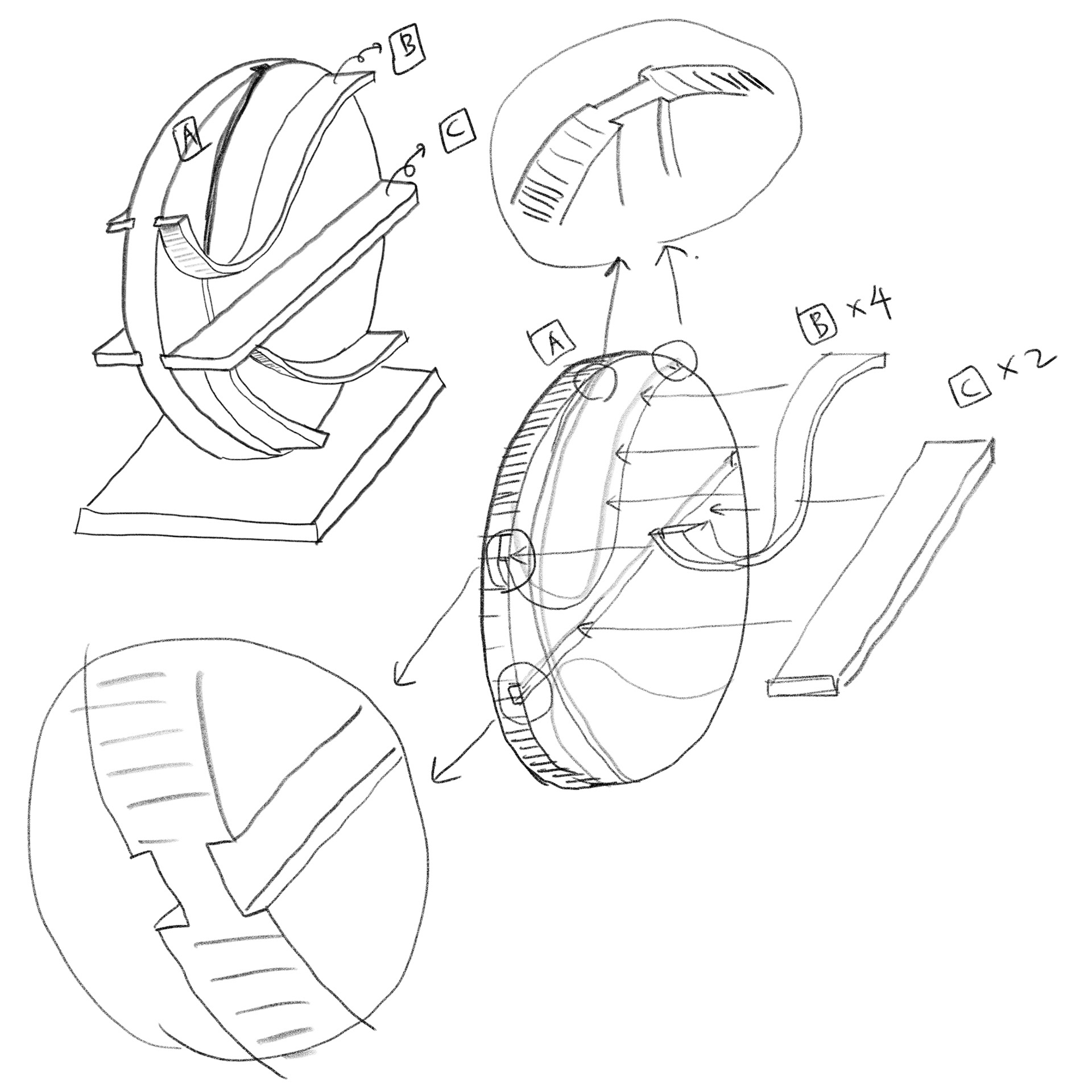
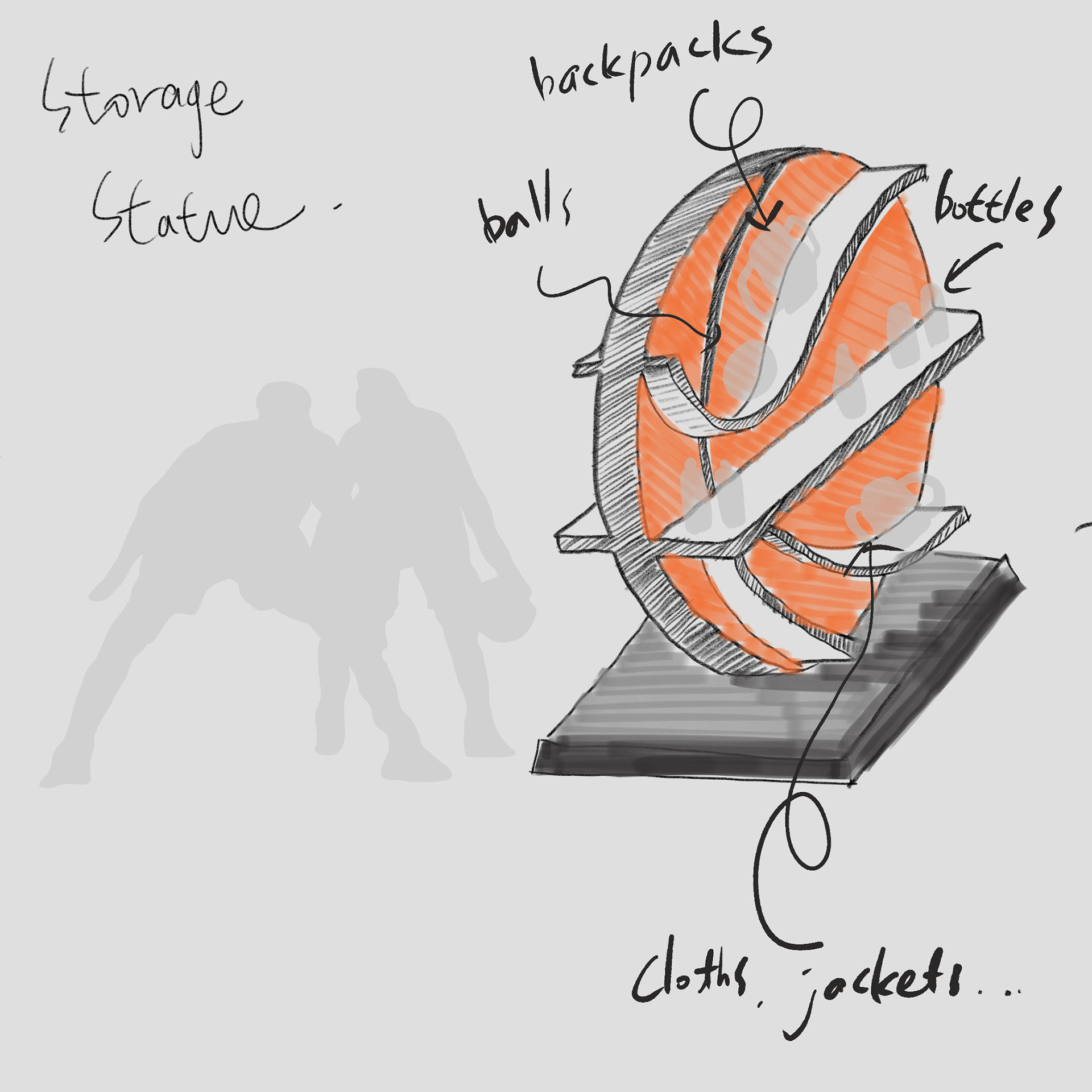
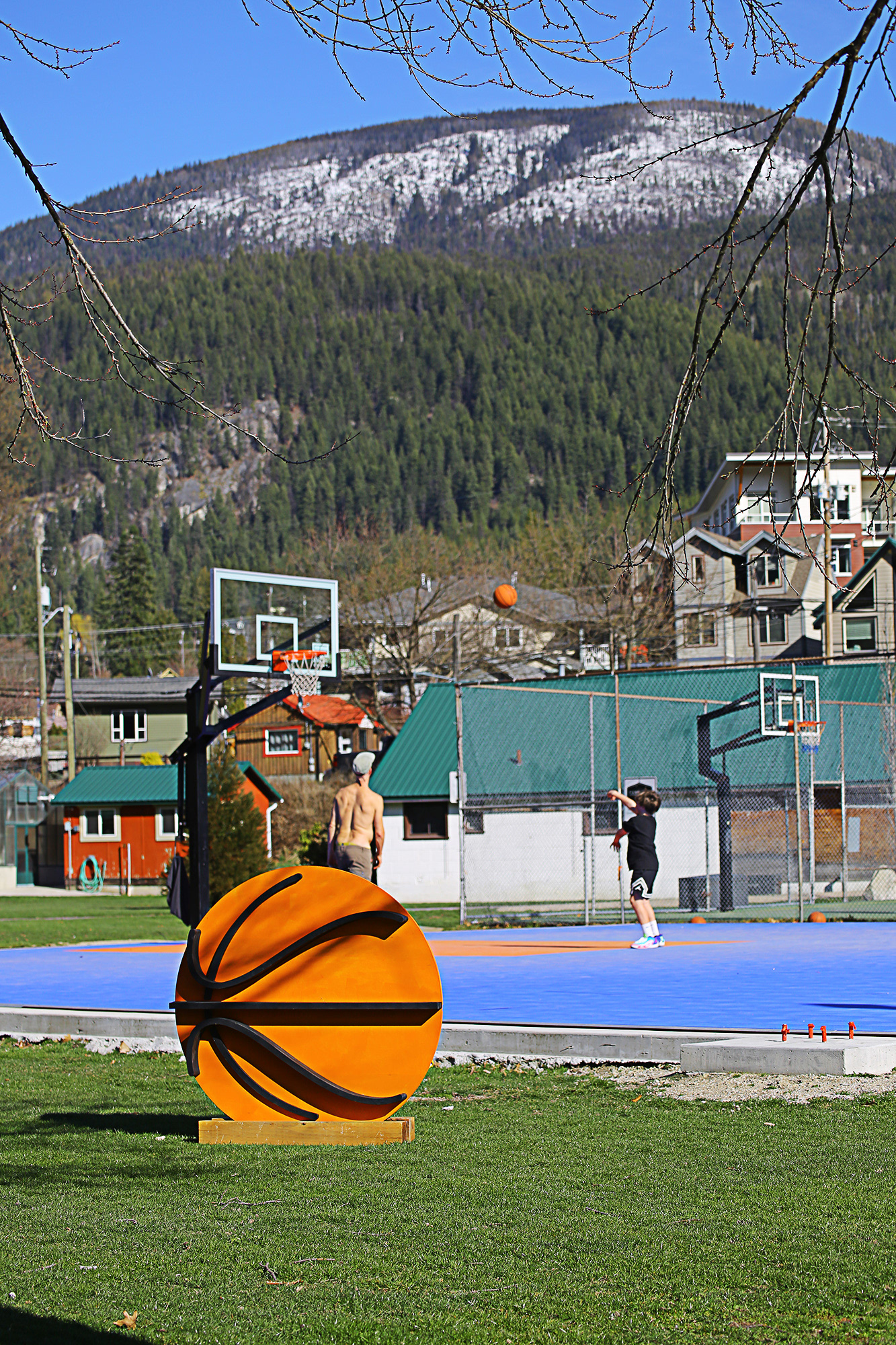
This project reimagines conventional park signage as a multi-functional community asset. Installed at Lakeside Park in Nelson, BC, the design responds to the needs of an active basketball court environment where players require temporary storage for personal items.
DESIGN STRATEGY
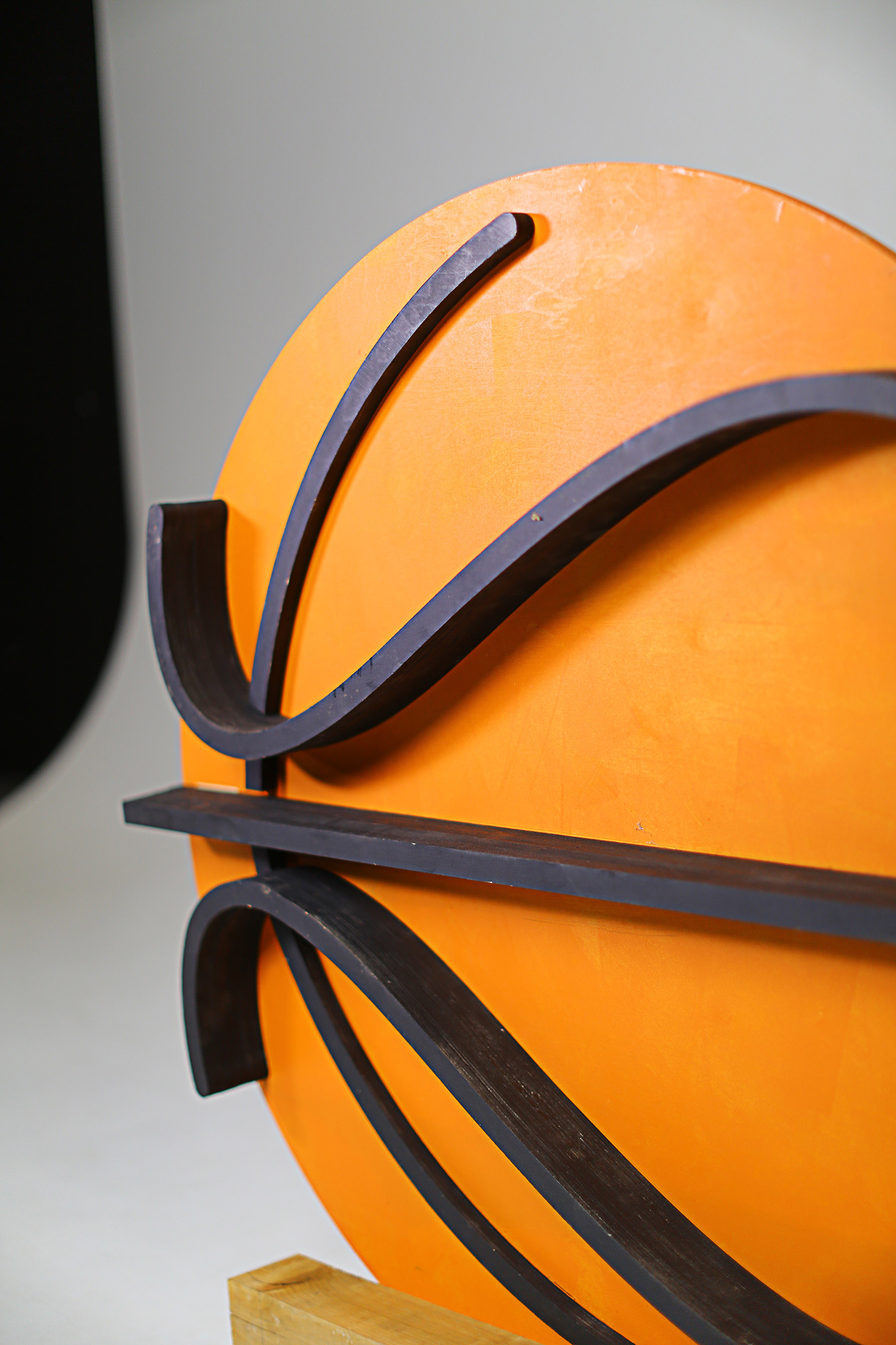
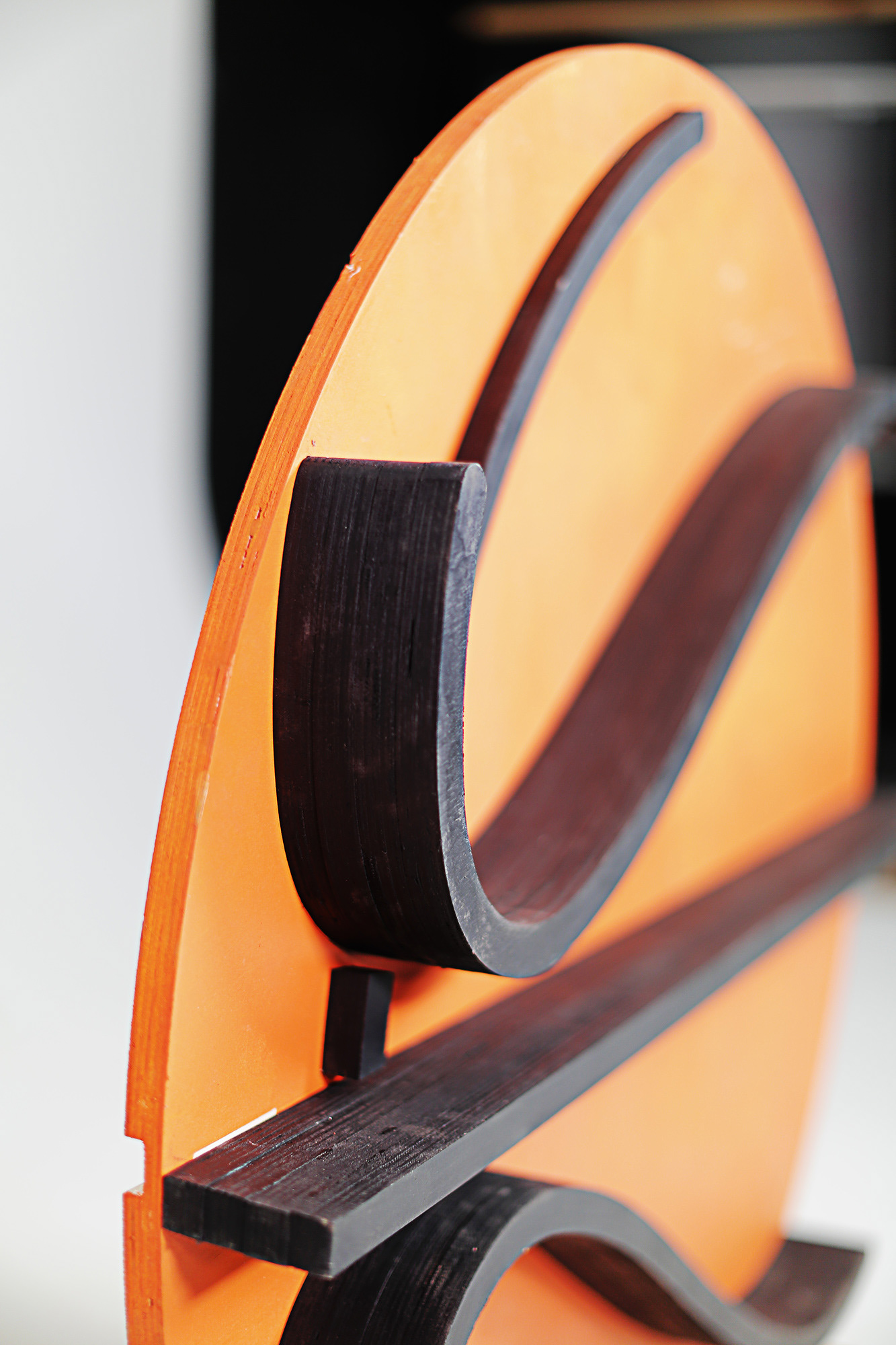
The basketball-shaped form functions simultaneously as a recognizable signifier of the court and as a usable storage structure.
Curved graphic lines—referencing the seam lines of a basketball—extend outward to create integrated shelving surfaces. These shelves accommodate basketballs, bags, and water bottles, transforming signage from a static informational object into a practical community tool.
MATERIAL & FABRICATION
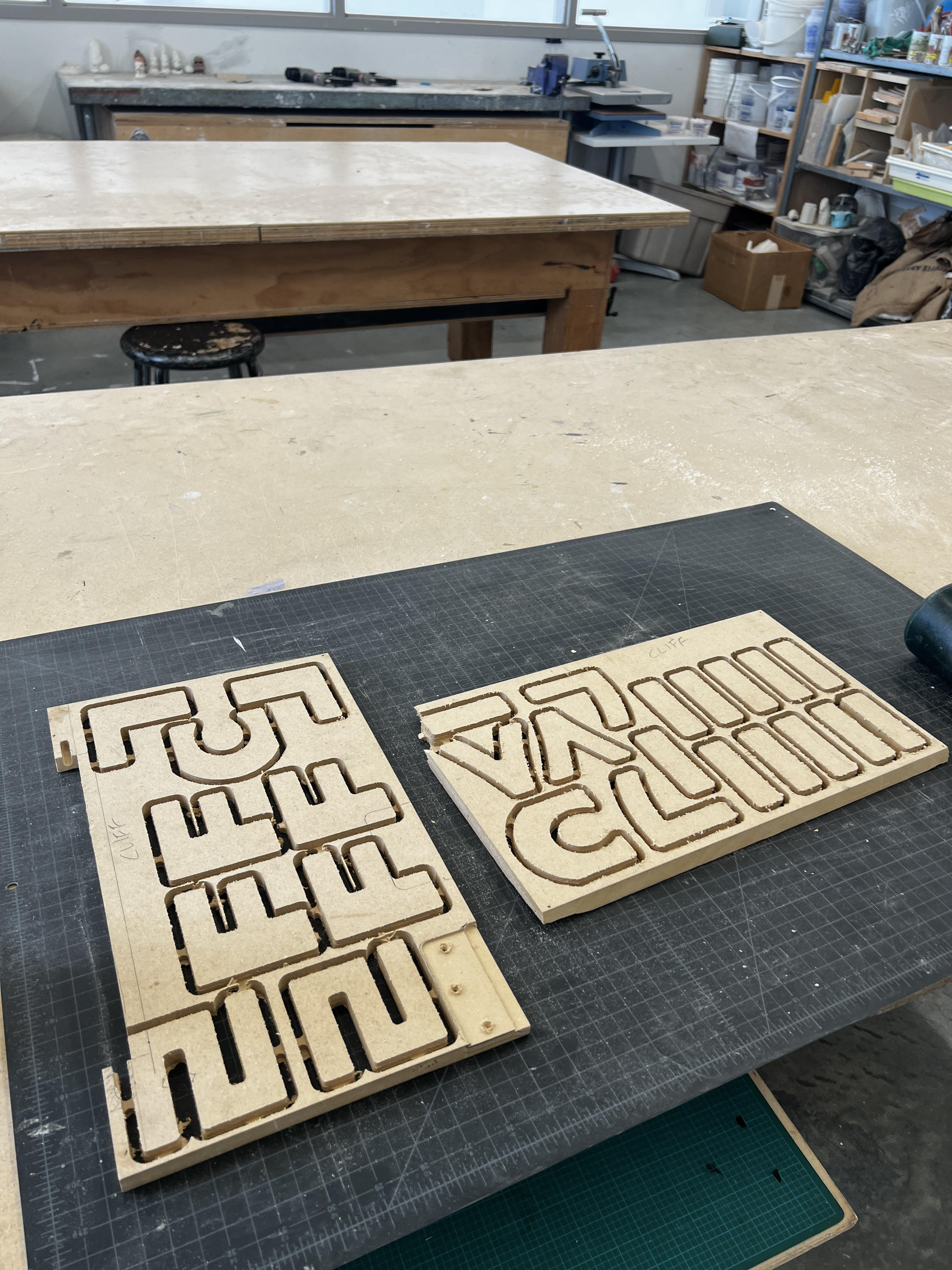
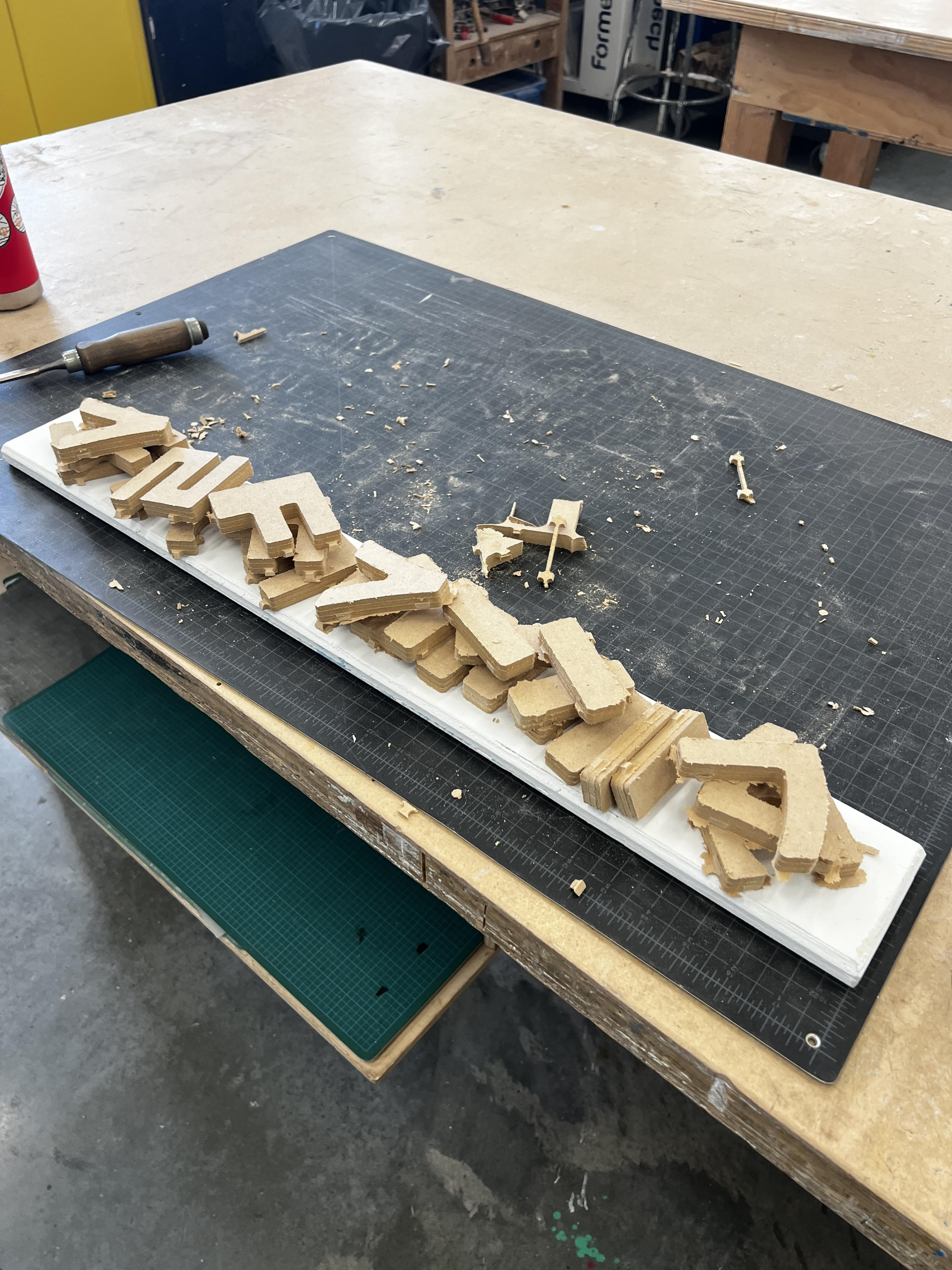
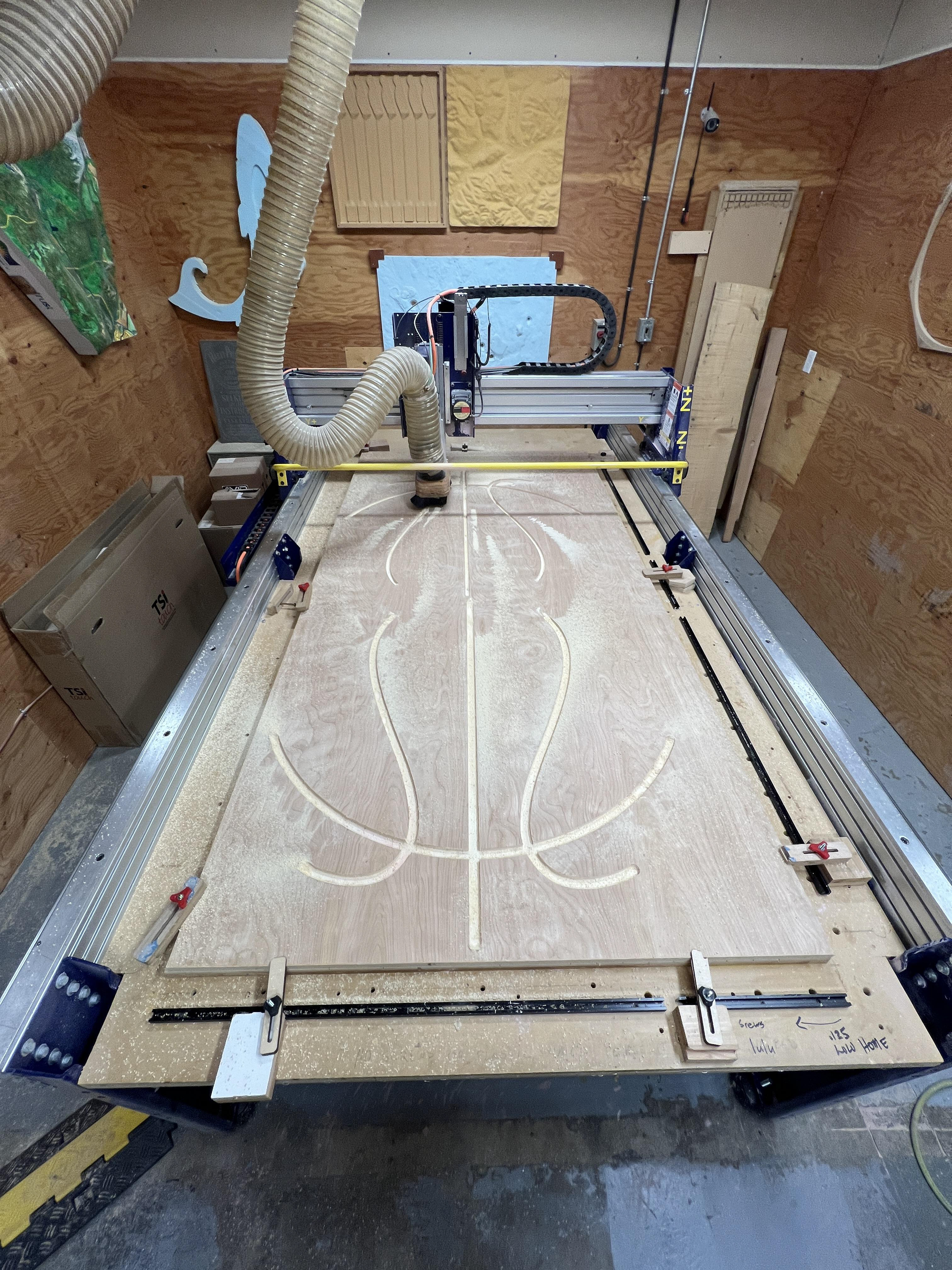
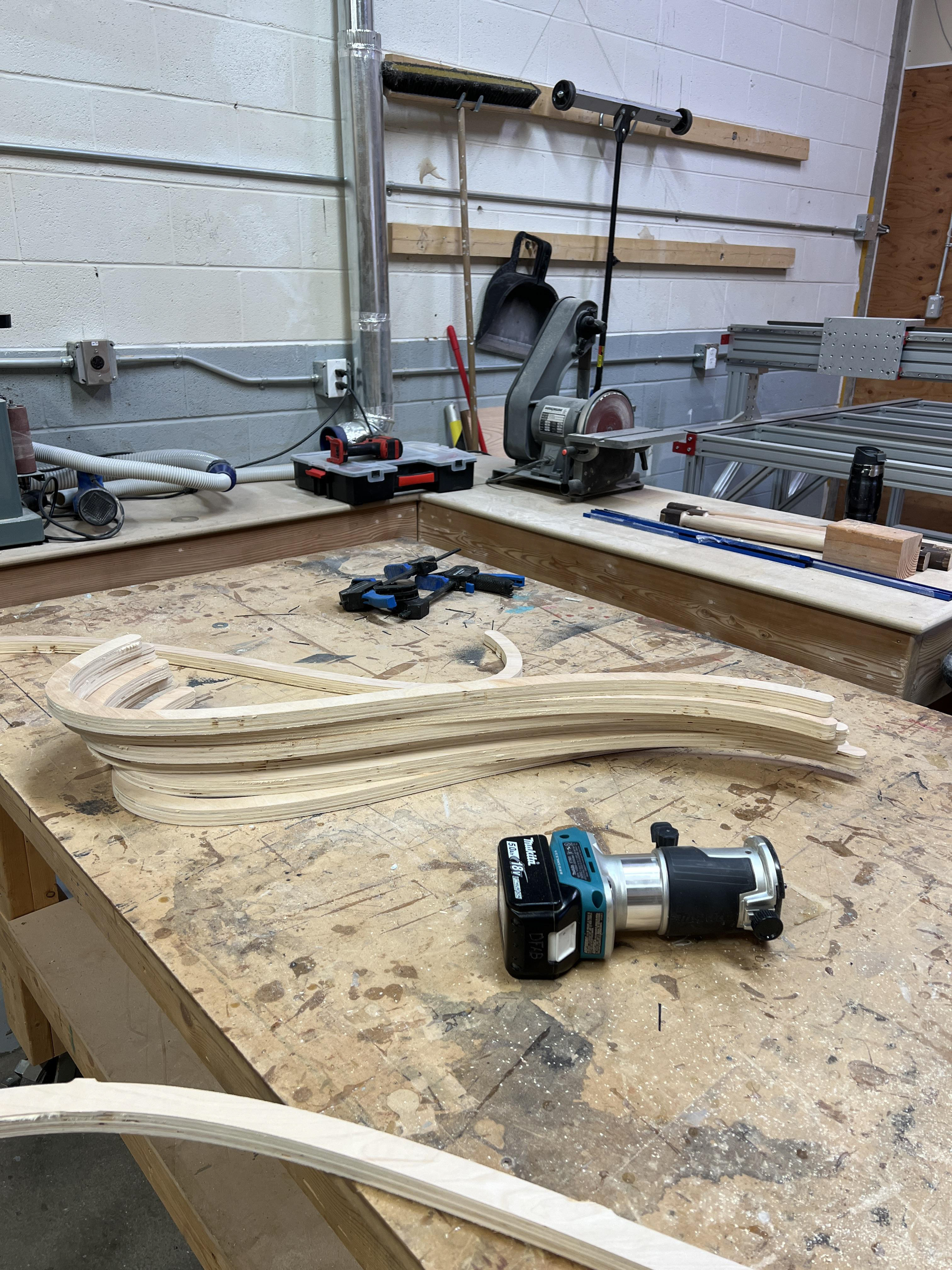
CNC-cut plywood
Fabricated at STAC (Selkirk Tech Access Center)
4' x 4' overall dimension
Designed for scalable adaptation to exterior-grade materials
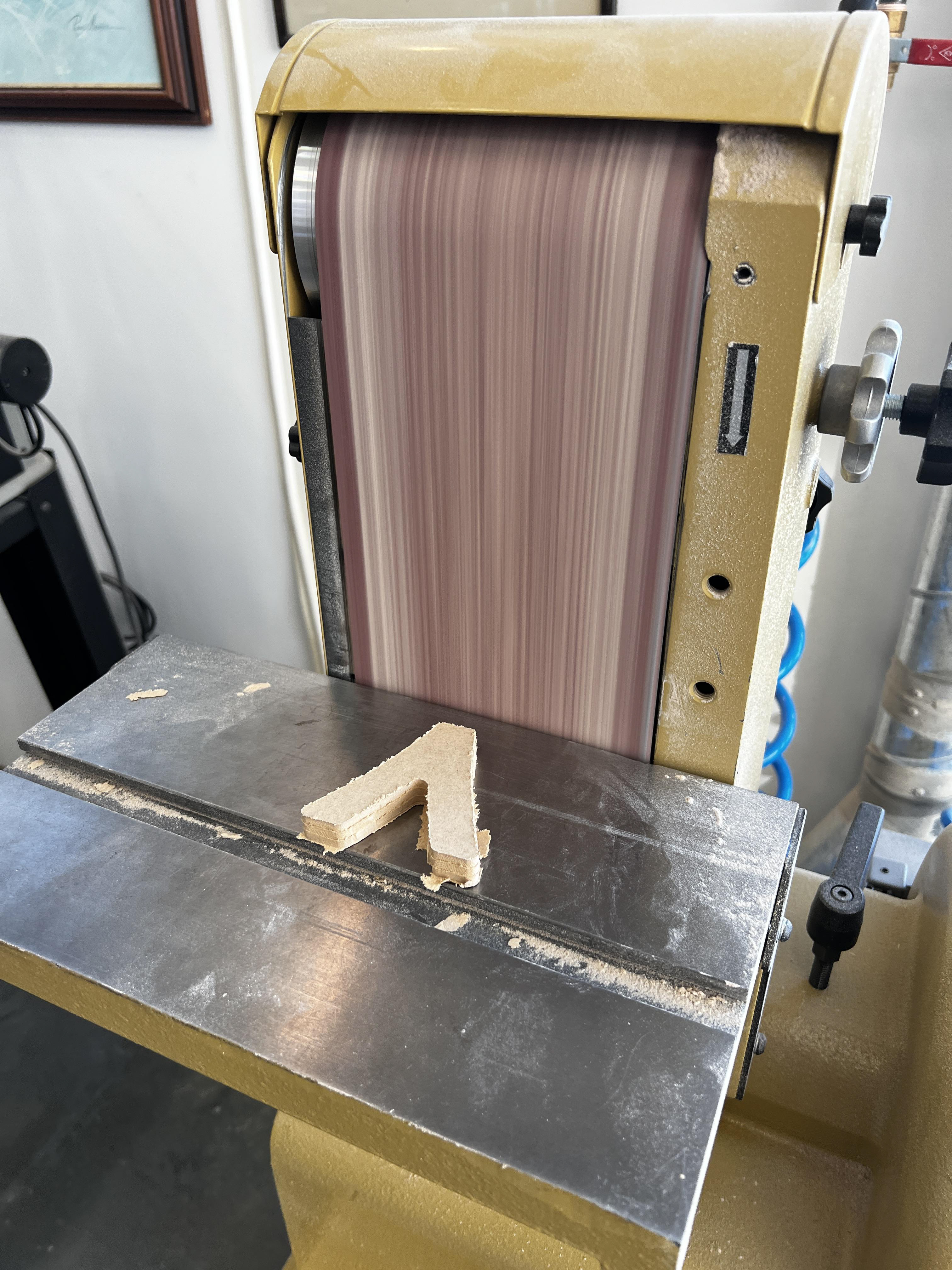
The prototype demonstrates how digital fabrication can efficiently translate graphic geometry into structural form.
FUNCTIONAL CONTRIBUTION
Provides on-site storage without additional standalone fixtures
Reinforces court identity through form recognition
Encourages shared use and informal social interaction
Reduces clutter around active play areas
SITE INTEGRATION
The installation integrates directly within the recreational setting, maintaining visibility while remaining proportional to the surrounding landscape and court scale.
DESIGN INTENT
This project explores how signage can operate as hybrid infrastructure—combining orientation, identity, and utility within a single object.
By embedding function into form, the work shifts public signage from passive communication to active community support.

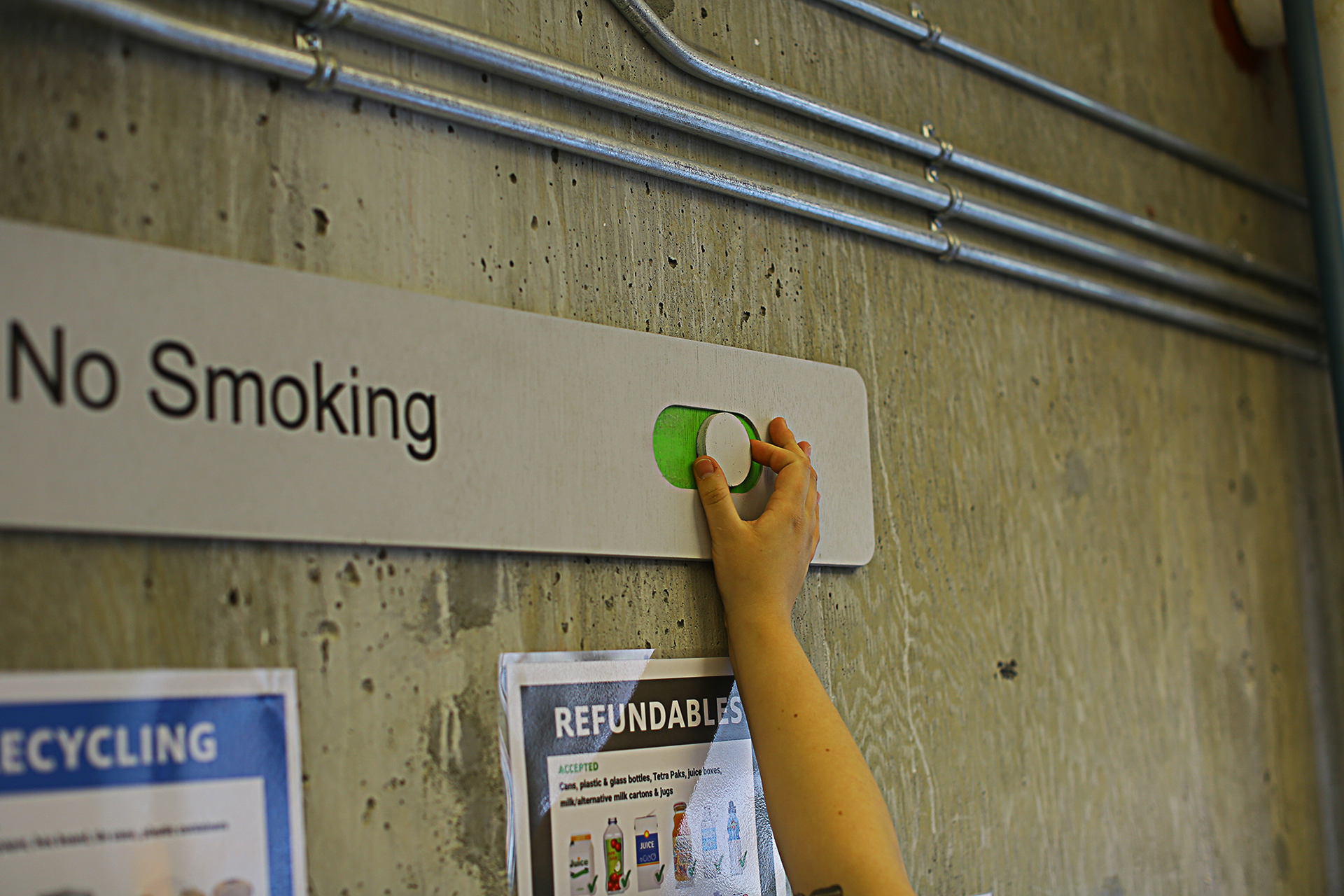
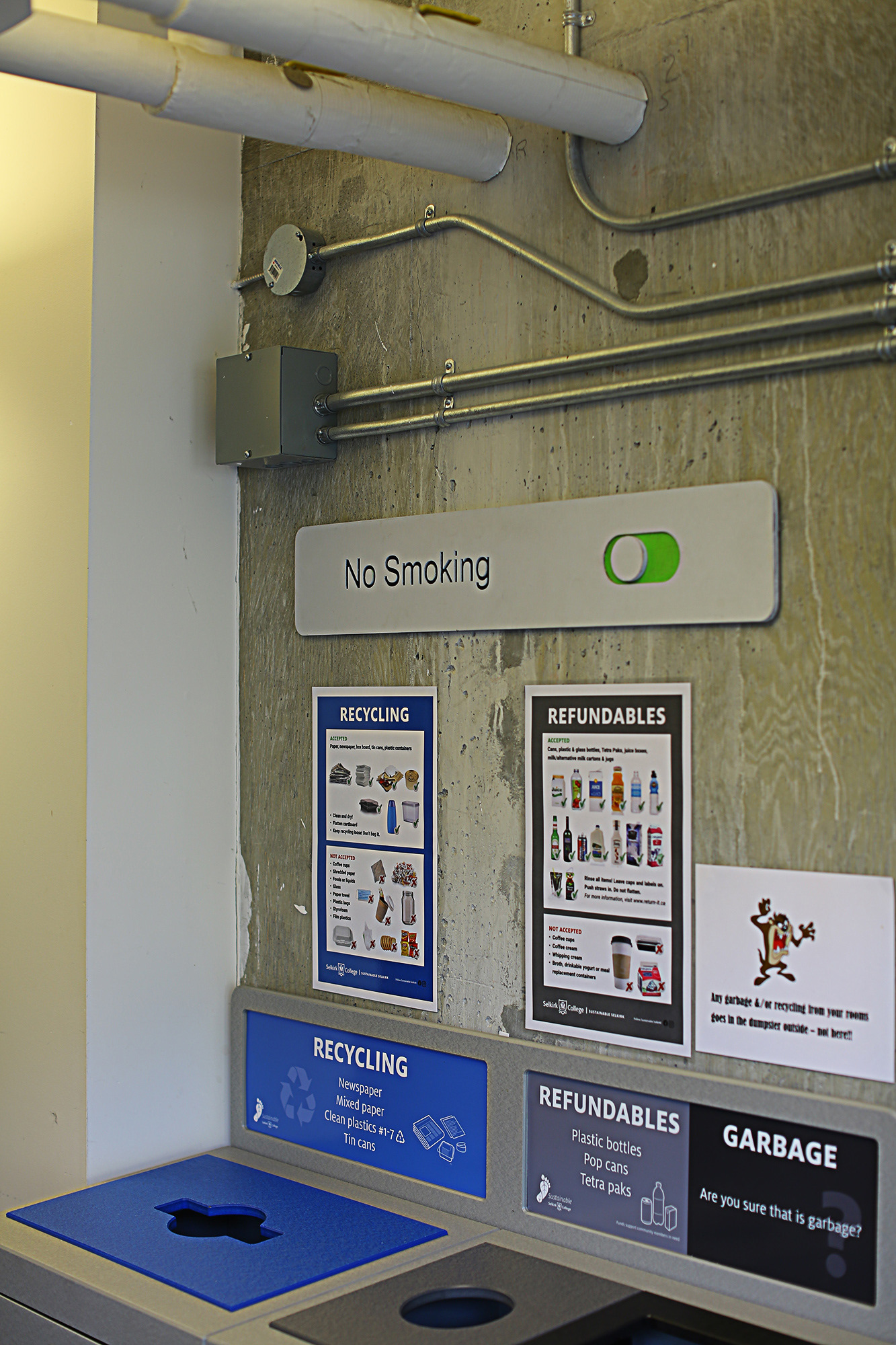
No Smoking Sign (2023)
Interactive Signage Prototype
PROJECT TYPE
Behavioral Signage Design
Interactive Rule-Communication Prototype
Interactive Rule-Communication Prototype
LOCATION
Selkirk College Dormitory
SCOPE
Concept development, graphic system design, mechanical interaction concept, fabrication prototype
CONTEXT
This project explores how regulatory signage can move beyond static instruction to create a more engaging and behavior-oriented communication tool within shared residential environments.
Developed for a Selkirk College dormitory setting, the sign addresses the enforcement of a permanent no-smoking policy.
DESIGN STRATEGY
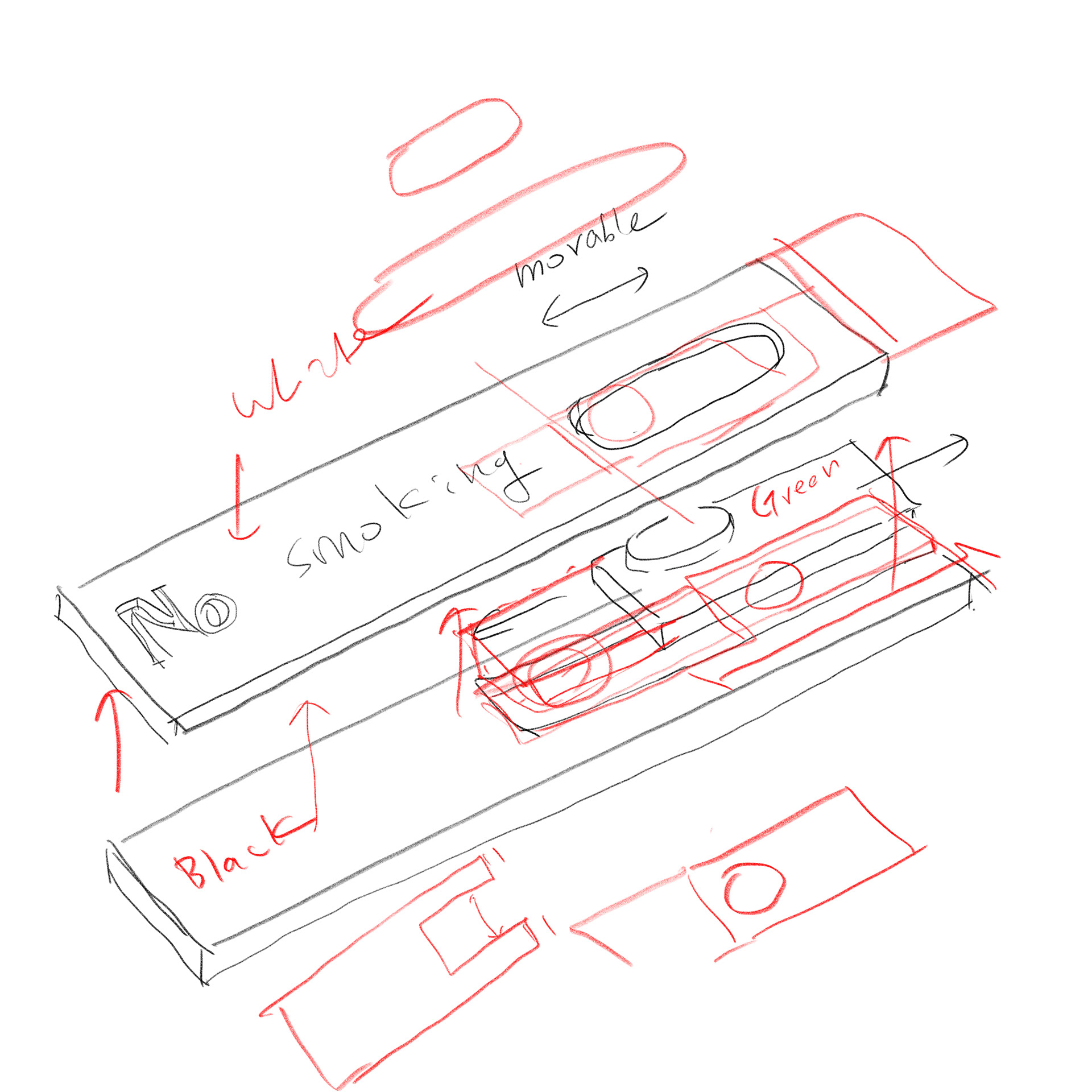
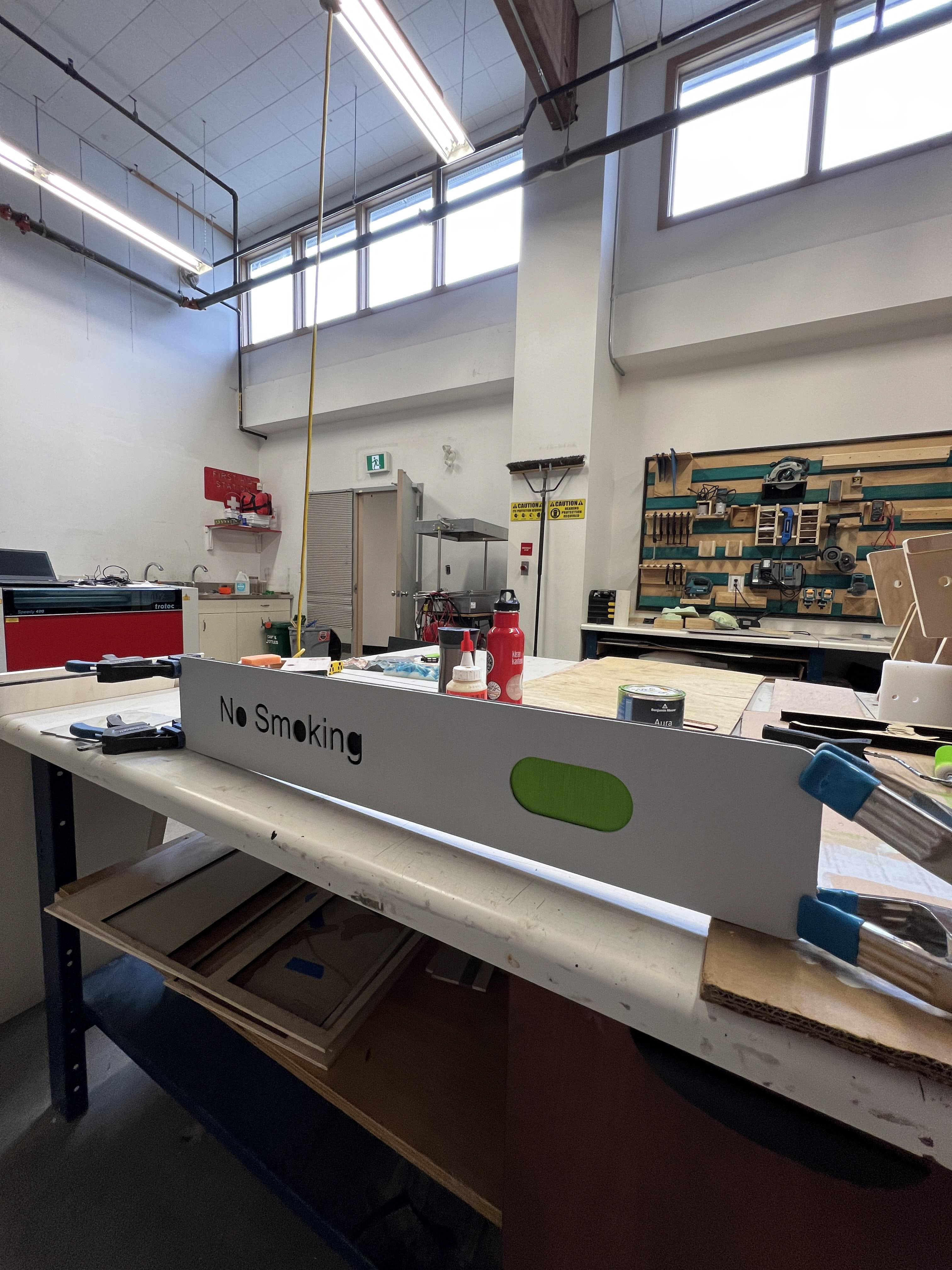
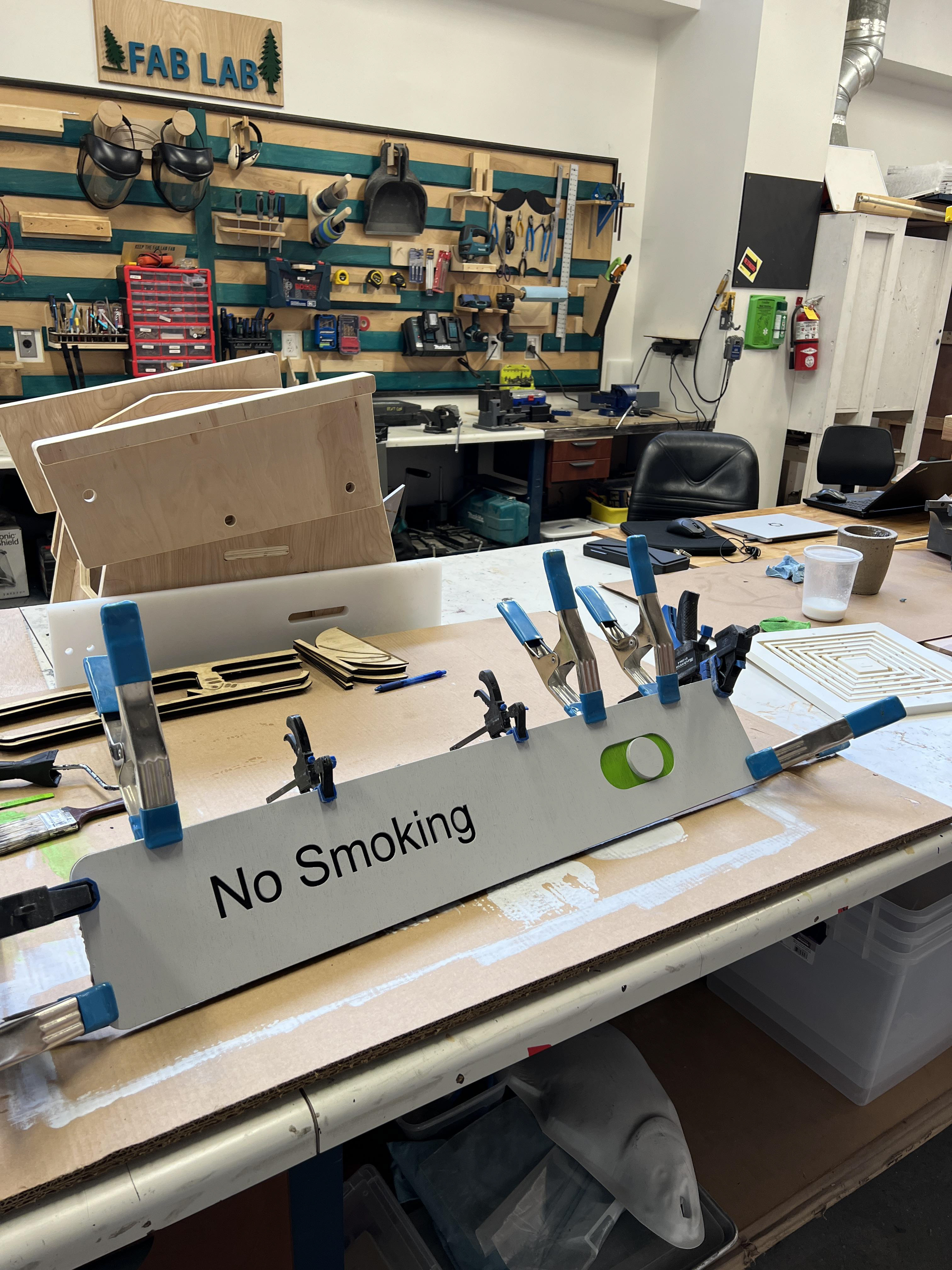
The design incorporates a movable toggle mechanism that temporarily shifts the display but automatically returns to green, visually reinforcing the permanence of the no-smoking rule.
Rather than relying solely on graphic prohibition, the sign introduces physical interaction to strengthen message retention and user awareness.
MATERIAL & FABRICATION
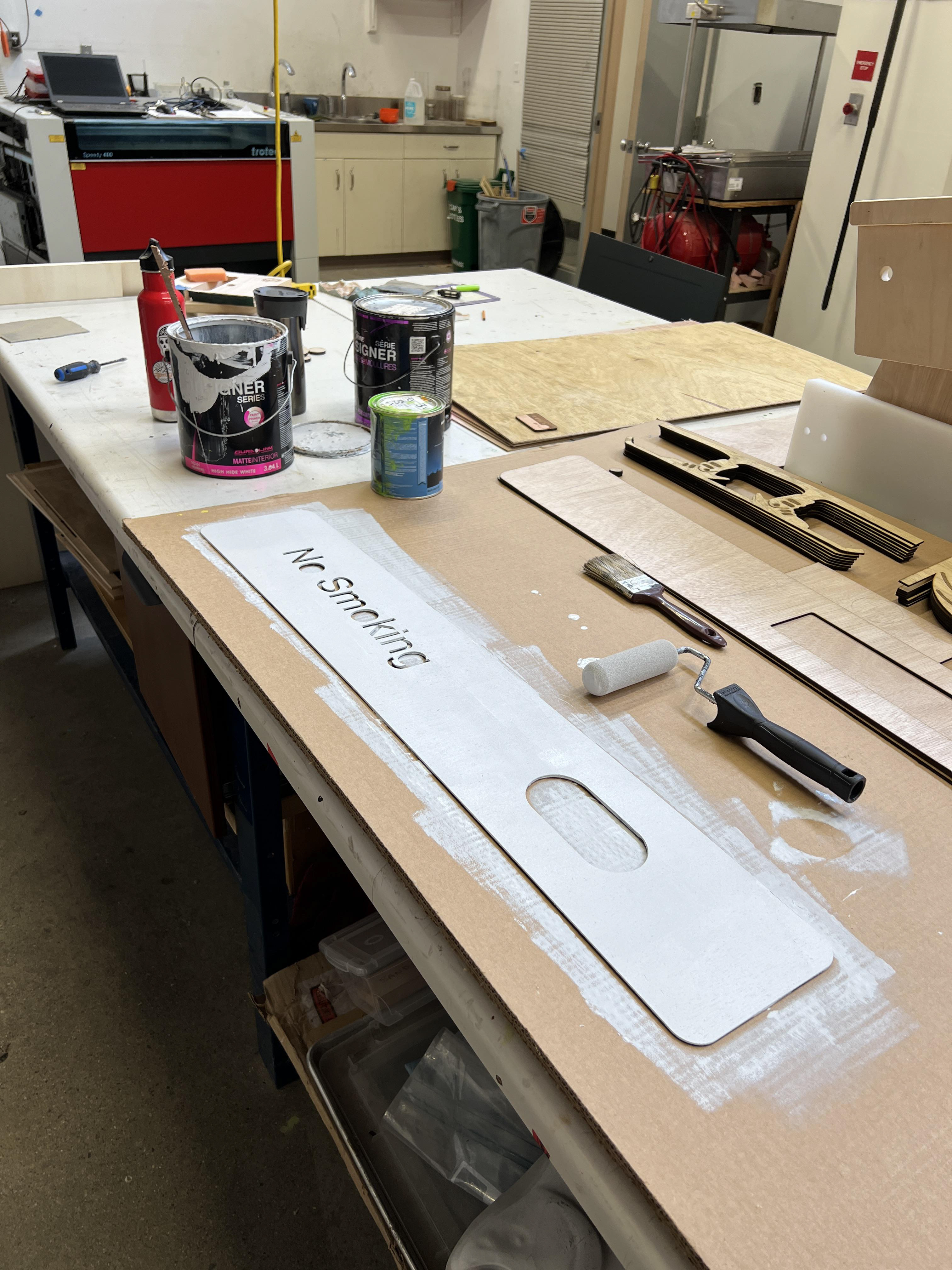
CNC-cut plywood construction
40" x 15" format
Integrated movable component
Designed as a scalable concept for durable, high-traffic environments
FUNCTIONAL CONTRIBUTION
Reinforces regulatory compliance through interaction
Increases visual engagement compared to static signage
Communicates permanence of policy through mechanical reset
Demonstrates potential for adaptable behavioral signage systems
DESIGN INTENT
This prototype reframes rule-based signage as an interactive system. By embedding a reset mechanism that always returns to green, the design symbolically communicates that certain community rules remain constant—regardless of temporary user input.
The project investigates how tactile engagement can support clearer communication in shared civic or institutional spaces.